Where Construction Runoff Goes After a California Storm
Green Hive Editorial Team
March 26, 2022
A new metal roof can supply free water in rainy Wollongong. Here is how to size a tank, add a first flush diverter and keep rainwater clean for the garden, toilet and laundry.

Green Hive is reader-supported. When you purchase through links on our site, we may earn an affiliate commission. To understand our thorough approach to rating brands and products, explore our comprehensive methodology.
Green Hive is reader-supported. When you purchase through links on our site, we may earn an affiliate commission. To understand our thorough approach to rating brands and products, explore our comprehensive methodology.
Most people think about a new roof in terms of leaks, looks and resale value. Few think of it as a water supply.
Yet that is exactly what it is. Every time it rains, your roof collects water that would otherwise rush into the stormwater system and out to the ocean.
In Wollongong, that is a lot of water. The Bureau of Meteorology records a mean annual rainfall of about 1,349 millimeters (around 53 inches) at its Wollongong University station. That is a serious resource sitting right above your head.
Not every roof makes a good catchment. Old tiles can be porous, and their joints hold dust, moss and grime. Metal sheets are smooth, so water runs off quickly and carries less debris with it.
That speed matters in a coastal city. Storms off the ocean can dump a lot of rain in a short time, and a smooth roof moves that water into the gutters before it has a chance to pick up much dirt.
The math is simple. As Inner West Council explains, every square meter of roof collects 1 liter of water for every millimeter of rain. A 150 square meter roof (about 1,615 square feet) in an average Wollongong year could therefore catch roughly 202,000 liters, or about 53,000 gallons, before losses.
That is why so many local homeowners plan a tank at the same time as a re-roof. Affinity Roofing offers roof replacement in Wollongong and across the South Coast, covering tile to metal conversions, Colorbond steel roofs, roof plumbing, gutters and downpipes in one job. Getting the metal roofing and the guttering right together makes connecting a tank far easier. Local outfits Sattin's Metal Roofing, Sheps Roofing Service and Primeline Roofing also take on metal re-roofs across the Illawarra, so it pays to talk about water collection with whoever quotes the job.
A good rainwater system is not complicated. It just needs the right parts in the right order.
Fresh metal sheets can carry manufacturing residue, swarf from cutting and general building dust. NSW Health advises that water from the first few runoffs off a new metal or concrete tile roof should be discarded.
So leave the downpipe disconnected from the tank, or set it to drain away, for the first few decent rains. Then connect it.
Fit leaf guards to your gutters and mesh screens at the top of each downpipe. These stop leaves, twigs and the odd tennis ball long before they reach the tank.
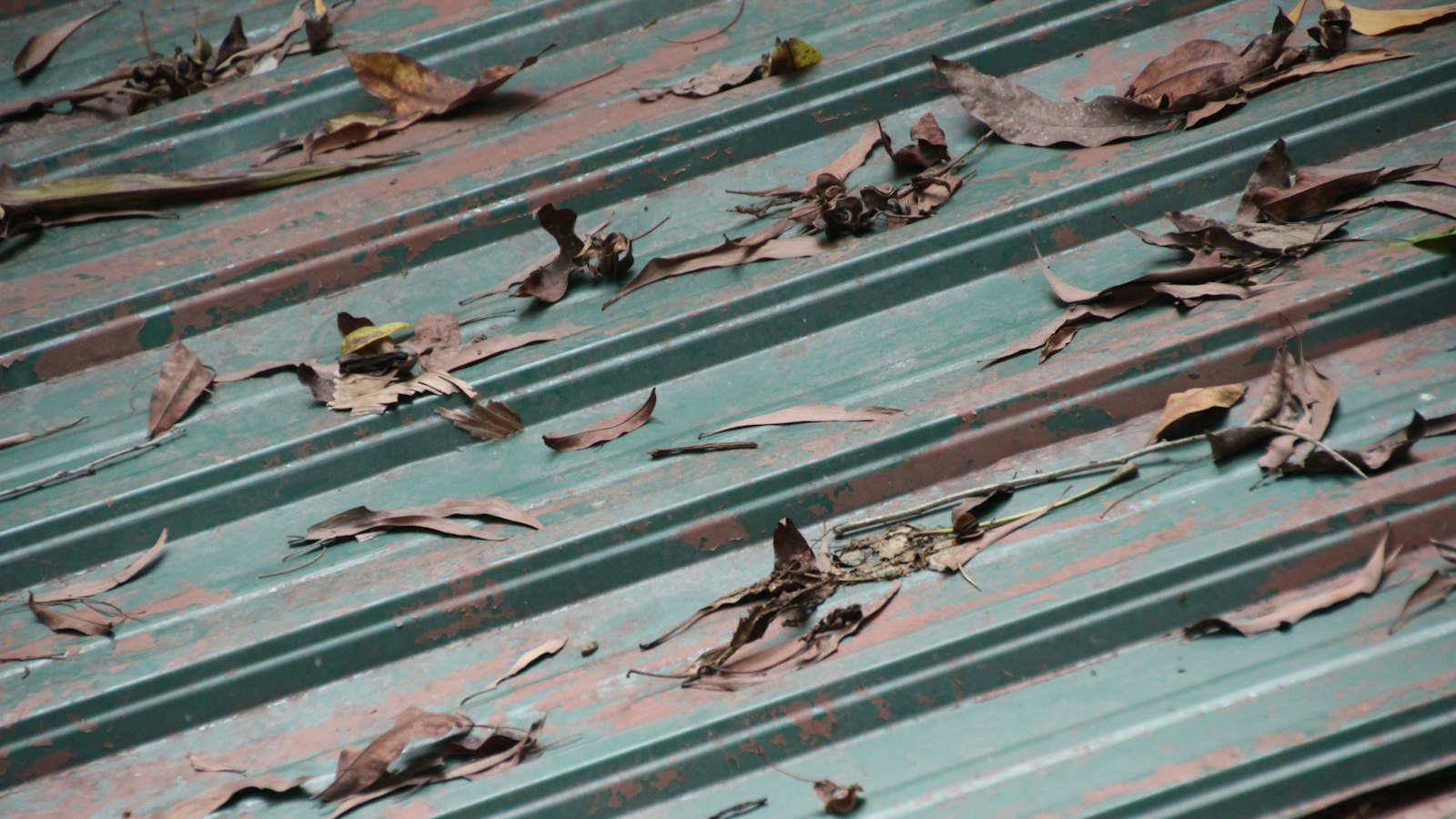
The first water off any roof, even an old one, carries the dirtiest load. That includes dust, leaves and, yes, bird droppings. Leaves like the ones in the photo above are the easy part, because gutter screens catch most of them. The fine grime that slips past them is the real problem.
A first flush diverter catches that early water and sends it away. According to Hornsby Shire Council, these devices typically stop the first 10 to 20 liters from flowing into the tank.
Do a quick check before you buy. With the 1 liter per square meter rule, a 150 square meter roof needs only about 33 millimeters of rain to fill a 5,000 liter tank. In a wet month, that could happen in a single storm.
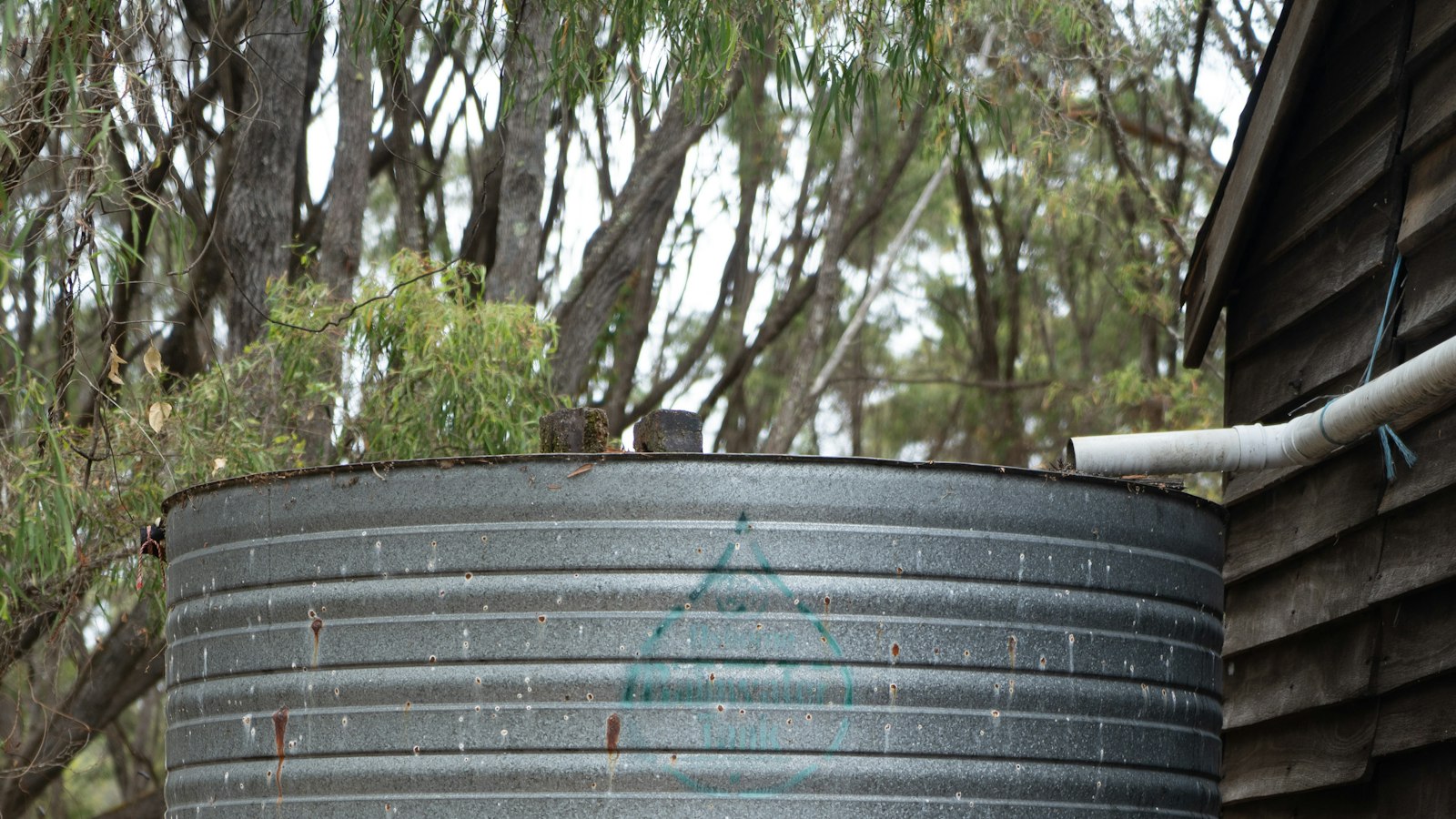
If your roof is small, a giant tank may sit half empty for most of the year. If your roof is big, a small tank will overflow often.
Insect-proof mesh on every opening keeps mosquitoes out. Make sure the overflow pipe runs to a legal stormwater point, not onto your neighbor's yard.
In most of urban Wollongong, mains water is available. NSW Health recommends using the public supply for drinking and cooking in urban areas, because it is filtered and disinfected.
That still leaves plenty of uses for tank water:
Toilets and laundries often use a large share of household water. Connecting them to your tank can cut your water bills and take pressure off local supplies during dry spells.
A rainwater system is low effort, but it is not zero effort. Think of it like a car that needs a quick check now and then.
Clean the gutters every few months, and more often if you have trees nearby. Empty the first flush diverter after big storms. Check the screens for holes.
Trim branches that hang over the roof. They drop leaves and give birds and possums a handy perch.
Every couple of years, look inside the tank for sludge at the bottom. A thin layer is normal. A thick one means it is time to call someone to clean it out.
Living between the escarpment and the sea brings its own quirks.
Salt spray near the coast is tough on metal. Ask your roofer about coastal-rated sheet and fasteners, and rinse the roof down occasionally if you live close to the beach.
Bushfire smoke and ash can also land on roofs in a bad season. If that happens, disconnect the tank and let the next good rain wash the roof before you reconnect.
A new metal roof is one of the best upgrades for rain harvesting in Wollongong. The climate does most of the work, and the roof delivers clean, fast runoff. Add a first flush diverter, keep the gutters clear and let the first few rains run to waste, and your tank will keep your garden green and your bills lower for years.
Bureau of Meteorology. (n.d.). Climate statistics for Australian locations: Wollongong University. https://www.bom.gov.au/climate/averages/tables/cw_068188.shtml
NSW Health. (n.d.). Rainwater tanks. https://www.health.nsw.gov.au/environment/water/Pages/rainwater.aspx
Hornsby Shire Council. (n.d.). Rainwater tanks. https://www.hornsby.nsw.gov.au/property/myproperty/rainwater-tanks
Inner West Council. (n.d.). Rainwater tanks: Frequently asked questions. https://www.innerwest.nsw.gov.au/ArticleDocuments/1110/Pack%202%20-%20FAQs.pdf.aspx