
.png)
How Healthcare Providers Can Manage Different Waste Streams Responsibly
Green Hive Editorial Team
March 26, 2022
More than 1 in 4 older adults fall each year. Here's how durable, low-toxicity materials, better lighting and smarter ventilation can make a home safer for aging residents and lighter on the planet.


Green Hive is reader-supported. When you purchase through links on our site, we may earn an affiliate commission. To understand our thorough approach to rating brands and products, explore our comprehensive methodology.
Green Hive is reader-supported. When you purchase through links on our site, we may earn an affiliate commission. To understand our thorough approach to rating brands and products, explore our comprehensive methodology.
If you spend your time researching bamboo bath mats, low-VOC paints, or furniture made without formaldehyde glues, you already understand something that elder care is catching up to: the materials and systems inside a home affect the people living in it far more than most of us realize. That insight sits at the heart of sustainable aging in place. What happens when the person in that space is 78, uses a walker, and has limited vision? The answer involves many of the same principles you already care about: nontoxic materials, energy-efficient systems, and thoughtful design that reduces waste and risk at the same time.
The overlap is practical as much as philosophical. According to AARP's 2024 Home and Community Preferences Survey, 75% of adults 50 and older want to stay in their current homes as they age, and that preference pushes families toward home modifications rather than relocation. Those modifications can lean green, not because sustainability was the original goal, but because durable, low-toxicity, energy-smart materials also tend to be safer and easier to maintain for aging bodies. This article covers how the indoor environment connects to fall risk and health, which upgrades serve both safety and sustainability, and how to sequence them on a realistic budget.
Families navigating this shift in dense urban environments face their own particular challenges, from older building stock to tight bathrooms and narrow hallways. For those managing care in New York City specifically, working through a detailed home safety checklist for elderly care NYC is a sensible first step before any renovation decisions get made. A good checklist covers tripping hazards, lighting, grab bars, and smoke and carbon monoxide alarms. Adding ventilation and material off-gassing to that review connects everyday safety with indoor air quality, an area that deserves the same attention.
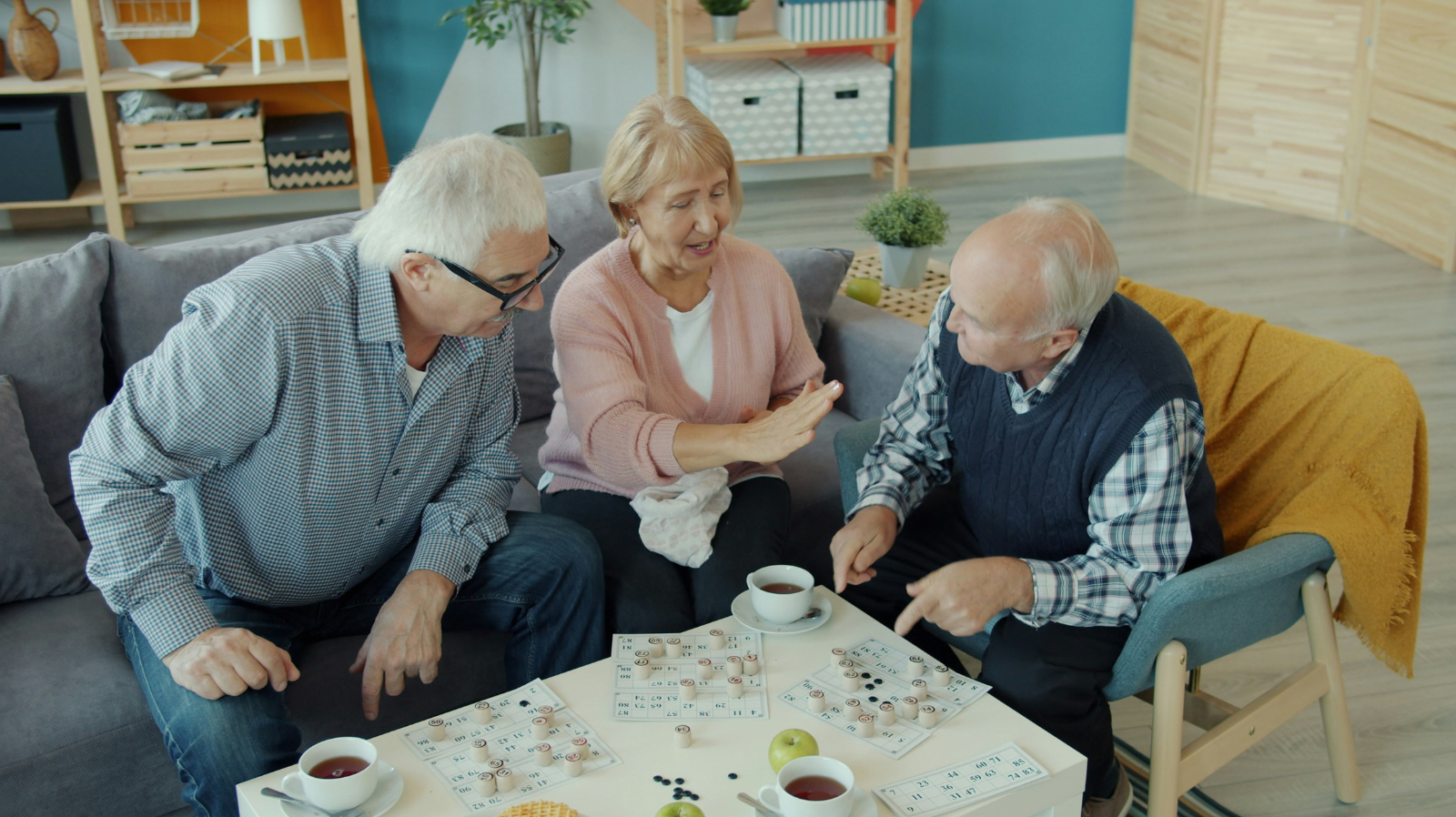
Aging-in-place conversations have traditionally centered on mobility: ramps, rails, and raised toilet seats. Sustainability was often treated as a separate concern. Yet indoor air quality, flooring, and climate control all shape daily health for older adults. Americans spend about 90% of their time indoors, where concentrations of some pollutants are often 2 to 5 times higher than outdoors, according to the EPA. The agency also notes that the people most susceptible to pollution, including older adults and those with heart or respiratory disease, tend to spend even more time inside. One caveat matters here: tightly sealed, energy-efficient homes without adequate mechanical ventilation can trap pollutants, so efficiency upgrades should always go hand in hand with good air exchange.
The fall data explain the urgency. More than one in four Americans aged 65 and older falls each year, according to the CDC, and falls lead to about 4.5 million emergency department visits annually. National Safety Council analysis of federal data counts 43,020 fall-related deaths among older adults in 2024, a 51% increase over the past decade. Poor-quality materials can add to the problem over time: finishes that wear unevenly, flooring that lifts or curls, and trapped moisture that encourages mold all create new hazards. Durable materials chosen with care tend to hold up longer and need less disruptive maintenance.
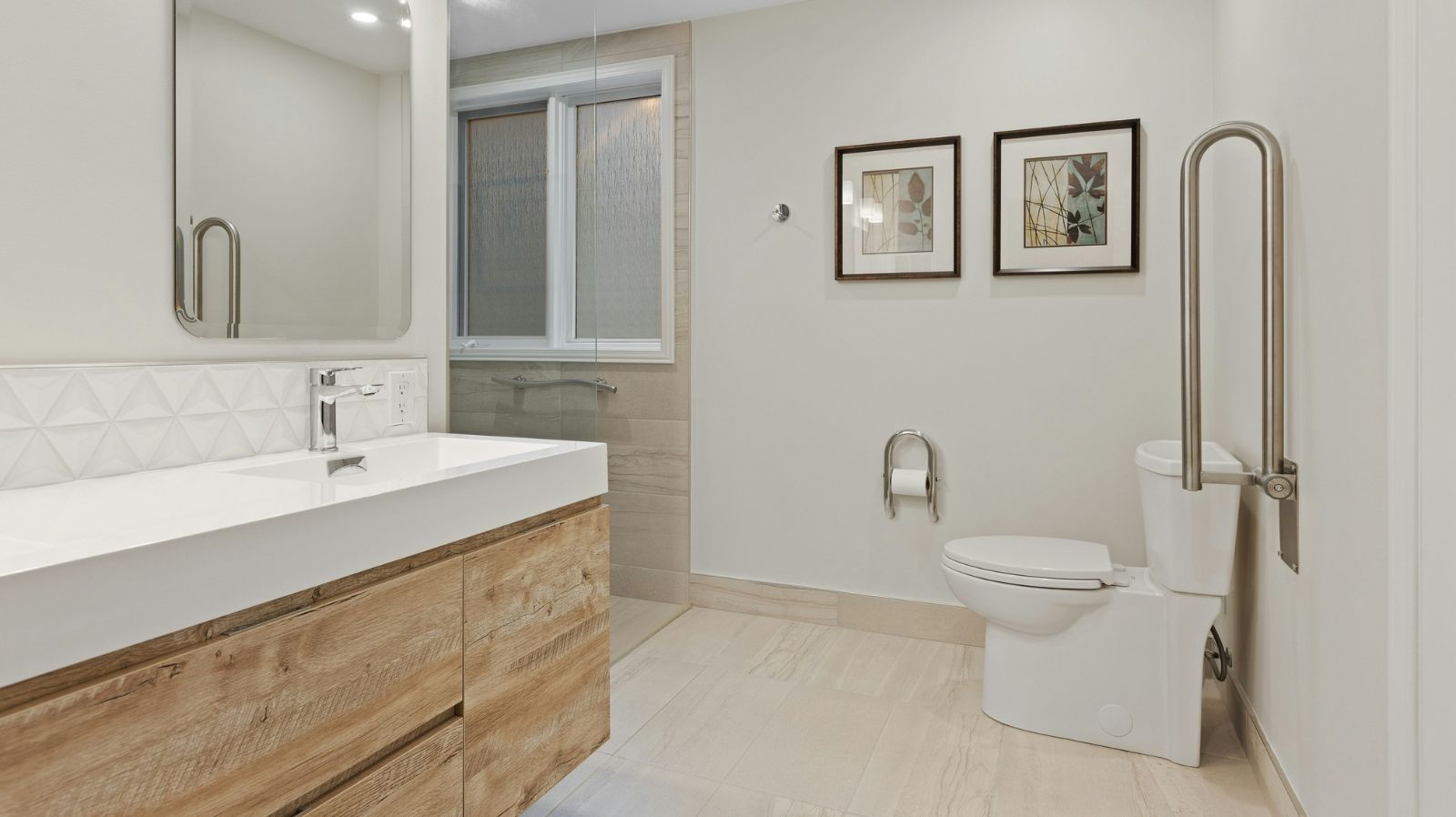
The physical toolkit for home safety has expanded. Grab bars and non-slip mats remain essential, and families can choose long-lasting metal bars over flimsy plastic options, or shower benches made from teak certified by the Forest Stewardship Council (FSC), which verifies that the wood comes from responsibly managed forests. Flooring offers more room for improvement. Cork is softer underfoot than tile and comes from bark that is harvested without cutting down the tree, while bamboo is a fast-growing alternative to hardwood. With either option, look for low-VOC finishes and adhesives and a matte, slip-resistant surface. Lighting is the simplest upgrade of all. According to the U.S. Department of Energy, residential LEDs use at least 75% less energy and last up to 25 times longer than incandescent bulbs, and fewer replacements mean fewer trips up a step stool.
Readers who enjoy browsing sustainably made furnishings will recognize the overlap here. The same qualities that make a piece attractive for an eco-conscious household (non-toxic finishes, sturdy natural materials, timeless construction) are exactly what make it a safer choice for an aging resident who needs furniture that won't wobble, off-gas, or wear out unevenly. Anyone exploring eco-friendly home furnishings will find that many pieces built for sustainability also meet accessibility needs, since both prioritize durability and simplicity over trend-driven design.
Smart home technology has matured, and many newer devices are built with efficiency in mind. Motion-sensor night lights draw little power and can help prevent nighttime falls by lighting the path to the bathroom. Smart thermostats help regulate temperature swings that are particularly hard on seniors with cardiovascular conditions, while also reducing energy waste. Voice-activated assistants can place emergency calls, adjust lighting, or provide medication reminders without the resident needing to reach a switch or a phone.
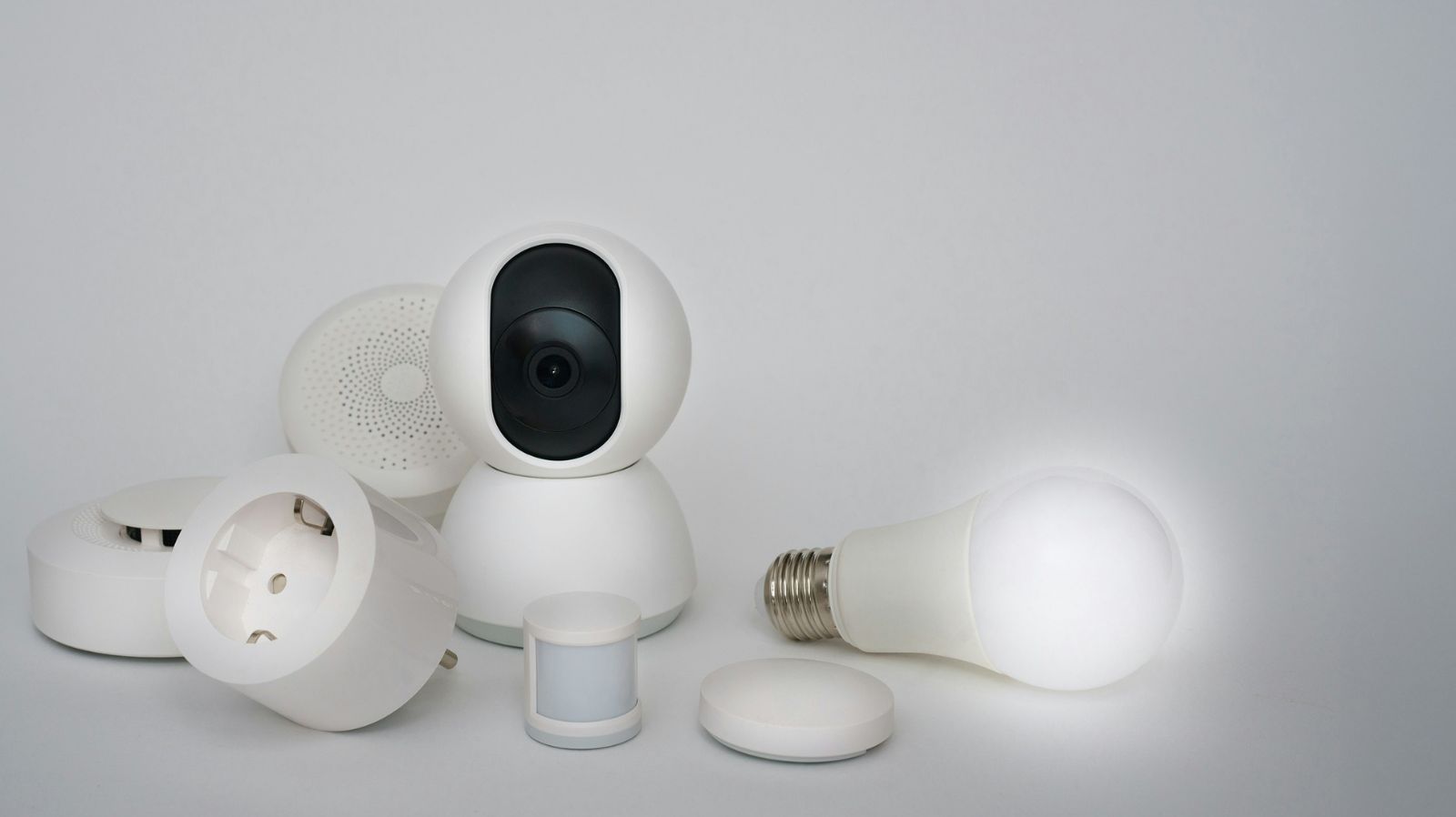
Before buying, check two things that rarely appear on the box: standby power use and how long the manufacturer commits to software updates. A device that stops receiving updates becomes electronic waste early, and in a safety role, an unsupported device is also a less reliable one.
Families starting this process shouldn't try to overhaul everything at once. The most effective approach begins with a room-by-room assessment that flags both safety hazards and material quality, starting with stairs, bathrooms, and walkways, where hazards such as uneven steps, throw rugs, and clutter tend to concentrate. From there, prioritize upgrades that solve two problems at once: replacing worn carpet with cork flooring, swapping incandescent bulbs for LED fixtures with good color rendering, or choosing furniture with rounded edges and stable, natural materials.
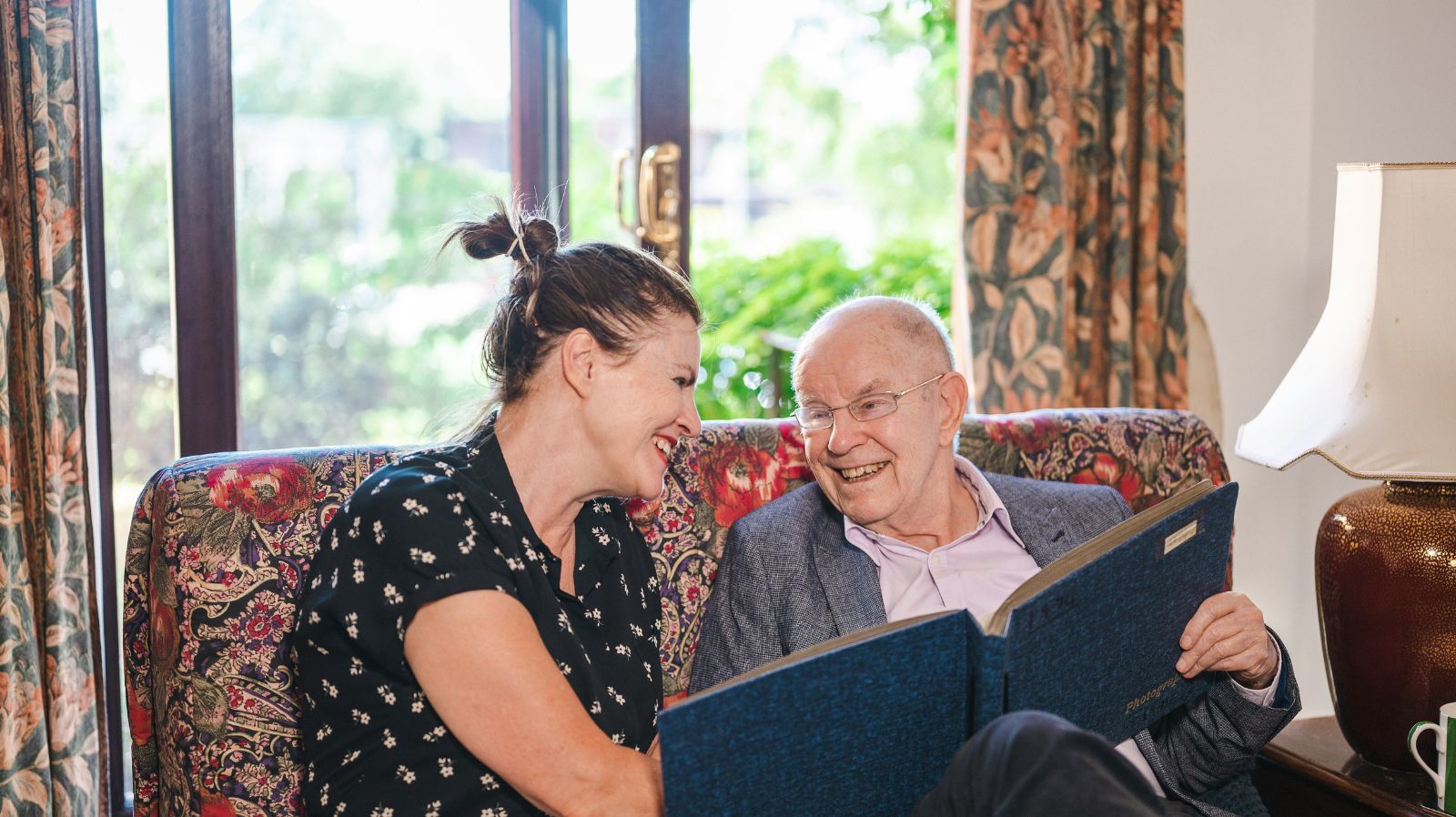
Budget constraints are real, so sequencing matters more than scope. A few well-made, long-lasting modifications usually make more sense, financially and environmentally, than a series of cheap fixes that need replacing within a year or two. The need is large: only about 40% of U.S. homes have even basic aging-ready features (a step-free entry plus a bedroom and full bathroom on the first floor), and just 6% of older households plan accessibility renovations, according to the U.S. Census Bureau.
Sustainable aging in place works best when safety and environmental goals are treated as one project. Fall risk, indoor air quality, and energy use all come back to the same decisions: which materials go into a home, how it is ventilated and lit, and how long each upgrade will last. Start with an assessment of stairs, bathrooms, and walkways, then favor durable, low-emission materials and efficient lighting over quick fixes. Pair every efficiency upgrade with good ventilation so cleaner air and lower bills go together. For furnishings and household products from brands that meet independent standards, the Green Hive directory is a useful starting point. Homes that are safer for aging residents and gentler on the environment are increasingly the same home, built with a bit more intention.
New AARP report: Majority of adults 50-plus want to age in place, but policies and communities must catch up. https://www.aarp.org/press/releases/2024-12-10-new-aarp-report-majority-adults-50-plus-age-place-policies-communities-catch-up.html
Centers for Disease Control and Prevention. (2026, September 4). Facts about older adult falls. https://www.cdc.gov/falls/data-research/facts-stats/index.htmlNational Safety Council. (n.d.). Older adult falls. Injury Facts. https://injuryfacts.nsc.org/home-and-community/safety-topics/older-adult-falls/
U.S. Census Bureau. (2023). Aging-ready homes in the United States: Perception versus reality of aging-accessibility needs: 2019 (Report No. P23-219). https://www.census.gov/library/publications/2023/demo/p23-219.html
U.S. Department of Energy. (n.d.). LED lighting. Energy Saver. https://www.energy.gov/energysaver/led-lighting
U.S. Environmental Protection Agency. (2026, May 27). Indoor air quality. Report on the Environment. https://www.epa.gov/report-environment/indoor-air-quality






.svg)
