
.png)
Solar Panel Installation Safety on Commercial Roofs
Green Hive Editorial Team
March 26, 2022
Stop heat before it enters. How exterior shading, pergolas, and trees cut cooling needs, and where to place them for the biggest effect.

Green Hive is reader-supported. When you purchase through links on our site, we may earn an affiliate commission. To understand our thorough approach to rating brands and products, explore our comprehensive methodology.
Green Hive is reader-supported. When you purchase through links on our site, we may earn an affiliate commission. To understand our thorough approach to rating brands and products, explore our comprehensive methodology.
During the warmer months, keeping a home comfortable can require significant amounts of energy. Air conditioning provides reliable relief from high temperatures, but homeowners can also reduce the amount of heat entering their homes by making better use of passive cooling strategies.

One of the simplest approaches is outdoor shading. By blocking direct sunlight before it reaches windows, walls, patios, and doors, strategically placed shade can help limit solar heat gain and create a more comfortable environment around the home. When combined with ventilation, insulation, efficient windows, and thoughtful landscaping, outdoor shading can become part of a more sustainable approach to home cooling. This article explains how passive shading works, where it delivers the most benefit, and how to choose structures and materials that hold up over time.
Passive cooling refers to strategies that help maintain comfortable temperatures without depending entirely on mechanical air conditioning. Instead of using energy to remove heat after it has already entered a building, passive techniques aim to prevent excessive heat from accumulating in the first place. They can include exterior shading structures, roof overhangs, awnings and screens, trees and other vegetation, natural ventilation, reflective or light-colored surfaces, efficient windows, appropriate insulation, and thoughtful building orientation.
Outdoor shading is an important part of this approach because sunlight is a major source of heat gain. When sunlight reaches a window, part of that solar energy passes through the glass and increases indoor temperatures. According to the U.S. Department of Energy, about 76 percent of the sunlight that falls on a standard double-pane window enters the home as heat. Walls and roofs also absorb solar radiation and transfer it into the building.

Once that heat enters the home, an air-conditioning system has to work to remove it. Outdoor shading intercepts sunlight before it reaches the building envelope. An overhang above a window can block high summer sun while still allowing daylight into the room. A shaded patio reduces the heat surrounding exterior doors and windows. Trees can provide similar protection while contributing to a more natural landscape.
No single measure works equally well for every property. Climate, building orientation, window placement, and daily patterns of sun exposure all influence which strategies are most effective.
Interior blinds and curtains are useful for controlling glare and improving privacy, but they typically allow sunlight to pass through the window before stopping it. The heat is already inside the room.
Exterior shading works earlier in the process. It prevents some solar radiation from reaching the glass in the first place. This distinction makes outdoor shading particularly useful for windows that receive strong direct sunlight. The Department of Energy estimates that window awnings can cut solar heat gain by up to 65 percent on south-facing windows and 77 percent on west-facing windows.

Adjustable exterior systems offer a further advantage because the amount of shading can be changed according to the time of day and season. Instead of blocking sunlight permanently, homeowners can adapt the shade to current conditions. This flexibility is particularly valuable in climates where the sun's position and intensity change considerably throughout the year.
Outdoor living areas are another place where passive shading can make a noticeable difference. A patio exposed to direct sunlight can become uncomfortably hot, making the space difficult to use during the warmest part of the day.
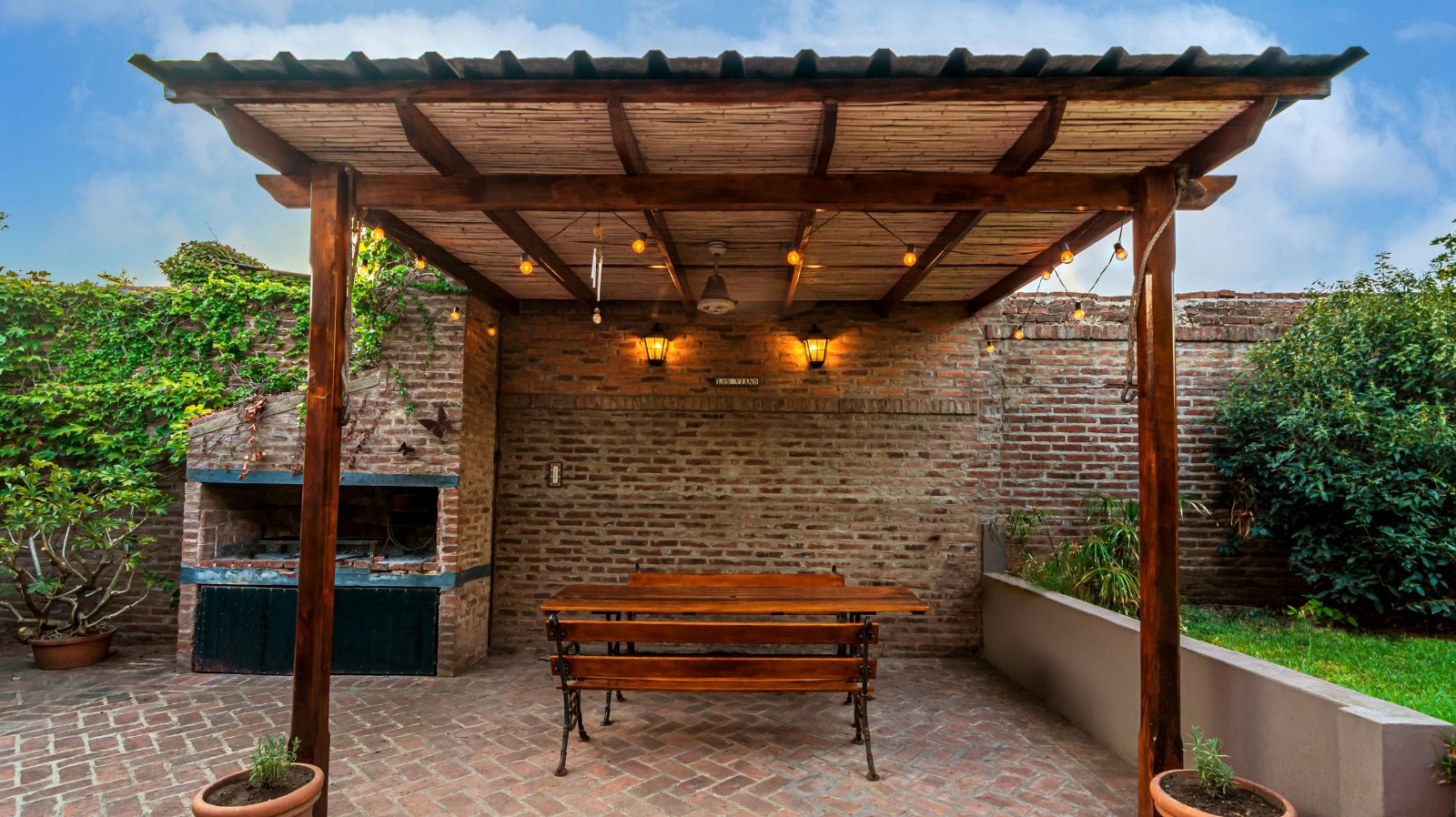
A pergola creates an intermediate shaded area between the home and the outdoors. Depending on its location and design, it can protect a patio, seating area, outdoor kitchen, or sections of the home's exterior from direct sunlight.
For homeowners looking for adjustable outdoor shade, louvered pergolas provide a flexible option. Their roof consists of adjustable slats that can be positioned to control the amount of sunlight reaching the space below. Louvers can remain more open when daylight and airflow are desirable and be adjusted toward a more shaded position when direct sunlight becomes intense.
The primary purpose is not to eliminate the need for air conditioning. Instead, an appropriately positioned outdoor structure complements other passive cooling measures by reducing exposure to direct solar radiation around frequently used areas of the home. A patio that is too hot in the afternoon can become a comfortable place for dining, reading, or working once it has adequate shade, which encourages residents to spend more time outdoors instead of relying exclusively on conditioned indoor space.
Installing a shading structure is only part of the process. Its location determines how useful it will be. Before making changes, homeowners can observe how sunlight moves across the property throughout a typical day. East-facing windows tend to receive more morning sunlight, while west-facing windows experience intense afternoon exposure. South-facing areas may benefit from appropriately designed horizontal shading, depending on the home's location and climate.
It is also worth considering existing sources of shade. Mature trees, neighboring buildings, fences, and roof overhangs may already protect certain parts of the property. A good shading strategy begins with observation rather than choosing a structure based on appearance.
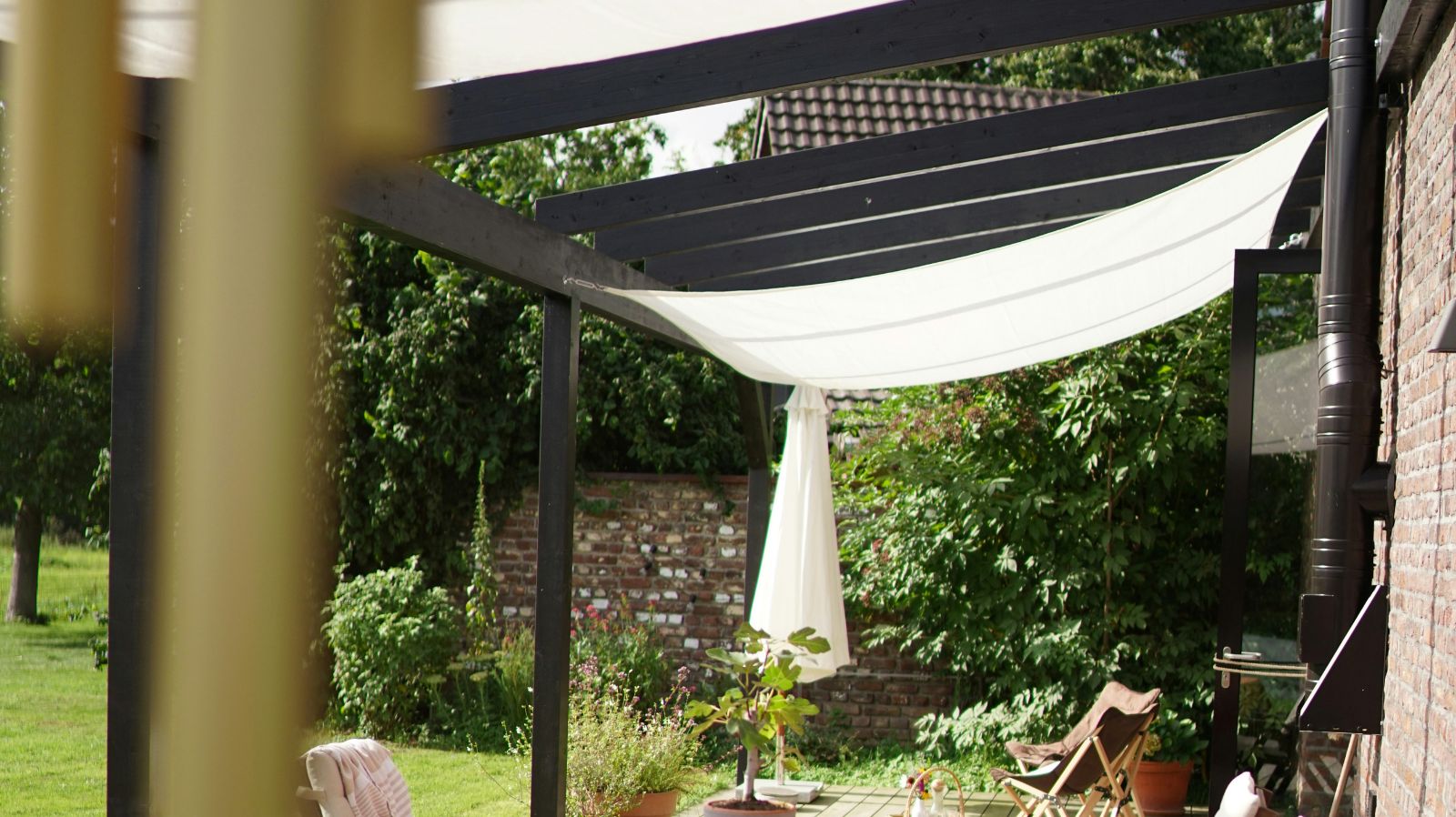
Shading and ventilation then work together. Once direct sunlight is reduced, opening windows during cooler periods helps move accumulated warm air out of the home. Cross-ventilation is particularly effective when openings are positioned to encourage airflow through different parts of the building, and a shaded patio or covered porch provides a cooler transition zone between the interior and the exposed outdoors.
Ventilation needs to be adapted to local conditions, however. Opening windows during a hot and humid afternoon may not improve comfort, while opening them during a cooler evening can release accumulated heat. The objective is to use natural airflow when outdoor conditions are favorable and rely on mechanical cooling only when they are not.
Plants and trees offer another sustainable way to manage solar exposure. Strategically positioned trees can shade windows, walls, roofs, and outdoor living areas. In suitable climates, deciduous trees provide dense summer shade while allowing sunlight through during colder months. The Department of Energy's landscaping guidance notes that air temperatures directly under trees can be as much as 25°F cooler than above nearby blacktop, and recommends native or drought-tolerant species in hot climates.
Landscaping requires long-term planning. Trees need room to grow, and their mature size, root systems, and proximity to structures should all be considered. Combining vegetation with architectural shading gives both immediate and long-term benefits: a pergola, awning, or overhang provides predictable shade while newly planted trees mature.

Energy efficiency is only one part of sustainable home improvement. The materials used for outdoor structures also deserve consideration, including durability, maintenance requirements, expected service life, repairability, and end-of-life recycling. A durable structure that remains useful for many years is generally preferable to a temporary shade product that needs frequent replacement.
Aluminum is one material commonly used for outdoor structures because it is lightweight, durable, and resistant to rot, and it can be recycled at the end of its useful life. Sustainability should still be considered across the entire lifecycle, including manufacturing, transportation, maintenance, and eventual disposal. Green Hive's brand directory lists home and garden companies that have passed a sustainability review, and our sustainable living guides cover related topics from insulation to water-wise planting.
Passive outdoor shading offers a relatively simple way to rethink how a home responds to heat. Rather than depending entirely on mechanical cooling after temperatures rise, homeowners can reduce solar exposure before that heat enters the building.
Pergolas, overhangs, exterior screens, trees, and other shading solutions all play a role when they are properly positioned and designed. Adjustable systems add flexibility by responding to changing sunlight throughout the day. Shading works best, though, as one layer in a broader strategy: efficient windows limit heat transfer, insulation slows the movement of heat through walls and roofs, ventilation removes accumulated heat, and efficient mechanical systems provide backup when passive measures fall short.
Passive shading is not a complete replacement for air conditioning. Working with a property's natural environment rather than constantly counteracting it is, however, a practical step toward a more energy-conscious and sustainable home.
U.S. Department of Energy. (n.d.). Energy efficient window attachments. Energy Saver. https://www.energy.gov/energysaver/energy-efficient-window-attachments
U.S. Department of Energy. (2021, August). Landscaping for energy-efficient homes [Fact sheet]. Energy Saver. https://www.energy.gov/sites/default/files/2021-08/ES-Landscaping_081721.pdf
Pacific Northwest National Laboratory. (2024, August). Window attachment technologies overview. U.S. Department of Energy. https://rescampaigns.pnnl.gov/sites/default/files/2024-08/Window%20Attachment%20Technologies%20Overview.pdf







.svg)
