
Sustainable Aging in Place: Eco-Friendly Home Safety
Green Hive Editorial Team
March 26, 2022
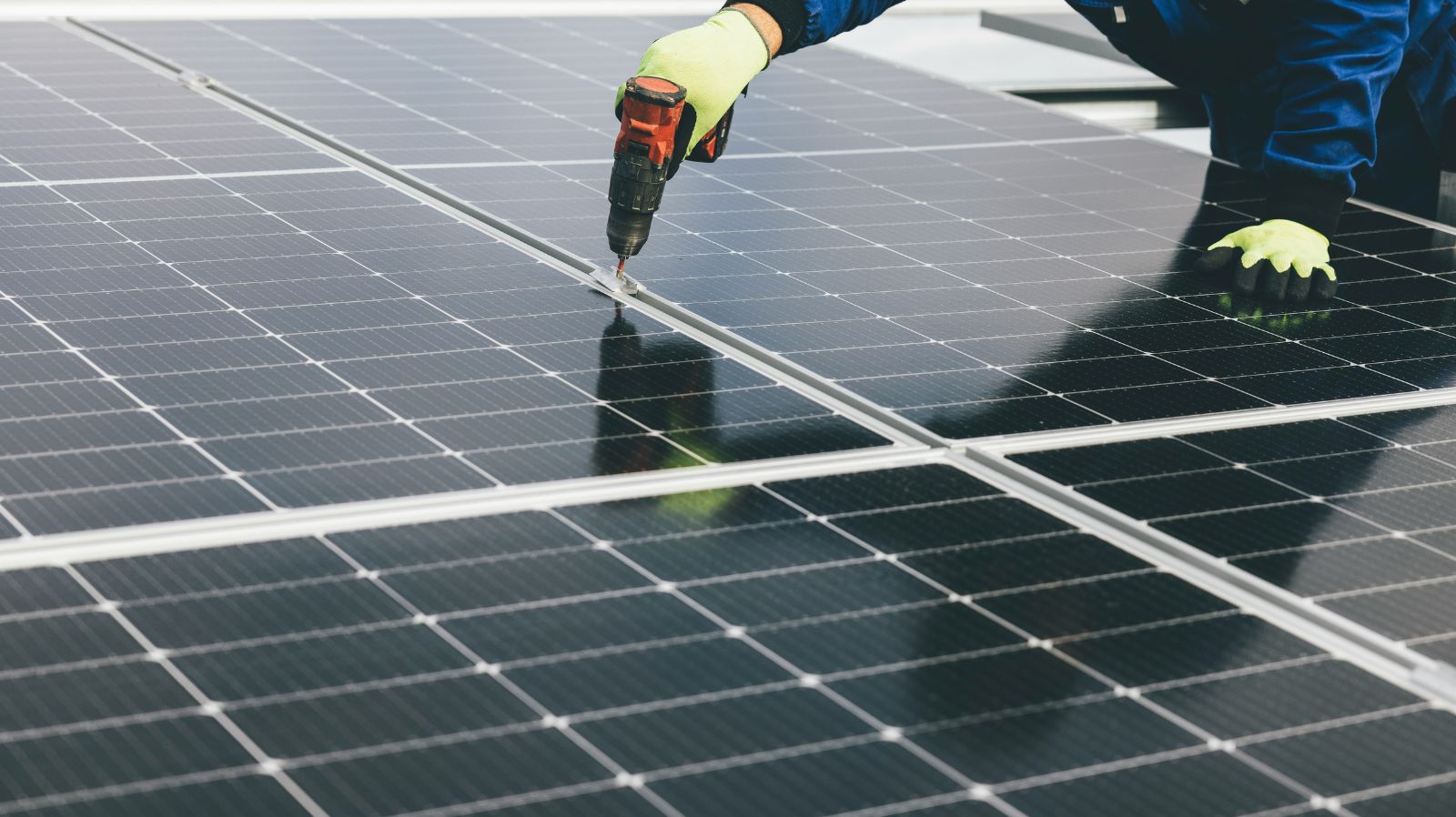
Every panel installed shrinks the walking space on a commercial roof. Here is how solar crews can manage fall, skylight, handling, and electrical hazards under OSHA rules.

Green Hive is reader-supported. When you purchase through links on our site, we may earn an affiliate commission. To understand our thorough approach to rating brands and products, explore our comprehensive methodology.
Green Hive is reader-supported. When you purchase through links on our site, we may earn an affiliate commission. To understand our thorough approach to rating brands and products, explore our comprehensive methodology.
U.S. commercial solar installations grew 6% in 2025, adding 2,345 megawatts of new capacity, according to the Solar Energy Industries Association and Wood Mackenzie. Each of those systems was built by crews working at height, often on large flat roofs crowded with skylights, hatches, and mechanical equipment. Solar panel installation safety is part of what makes renewable energy sustainable in practice: clean power should not come at the cost of the people who install it.
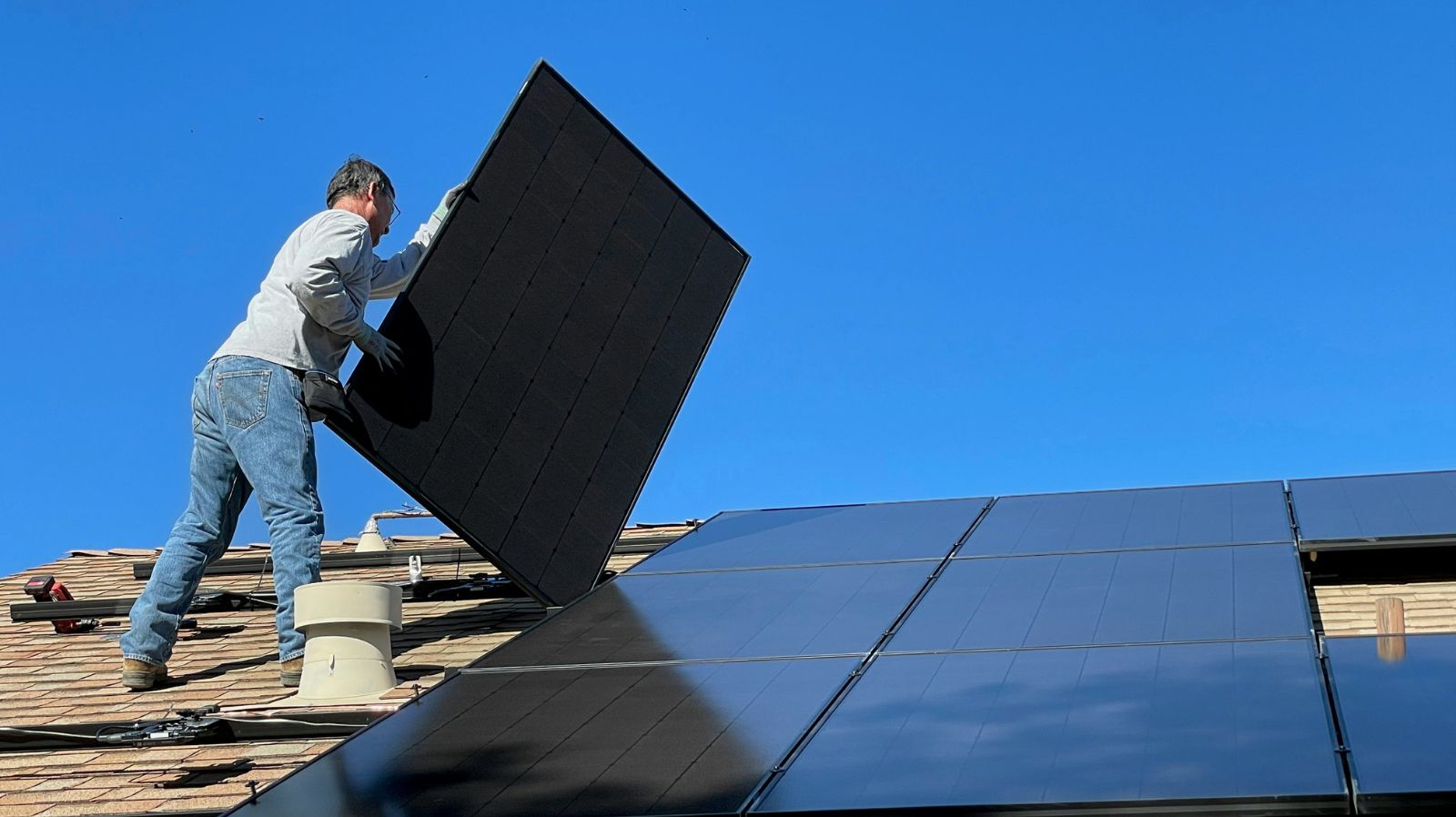
A worker carrying a panel up a ladder is already in one of the job's most dangerous moments, before reaching the roof. Solar crews also face a hazard that grows as the work progresses, because every panel installed shrinks the walking space the next worker depends on. This article covers the fall risks specific to commercial solar, the OSHA requirements crews cannot skip, and the practical controls that prevent injuries on the roof.
Falls, slips, and trips caused 370 of the 1,032 deaths among U.S. construction and extraction workers in 2024, according to the Bureau of Labor Statistics. Solar installation inherits that baseline risk before adding its own. Brent Stewart, a South Carolina personal injury lawyer with an AV Preeminent® Rating from Martindale-Hubbell, lifetime membership in the Multi-Million Dollar Advocates Forum, and lead counsel of Stewart Law Offices, warns that the physical and financial consequences of these rooftop accidents are often severe: "An on-the-job injury can be minimal, but it can also change your life forever. Many people get injured and aren't able to go back to work. Workers' compensation helps fill those gaps. You want to make sure you have someone who can help you maximize your recovery."
OSHA's solar safety guidance confirms that installation work falls under construction fall protection standards once a worker is exposed to a drop of six feet or more, a threshold crews reach almost immediately on most flat commercial roofs.
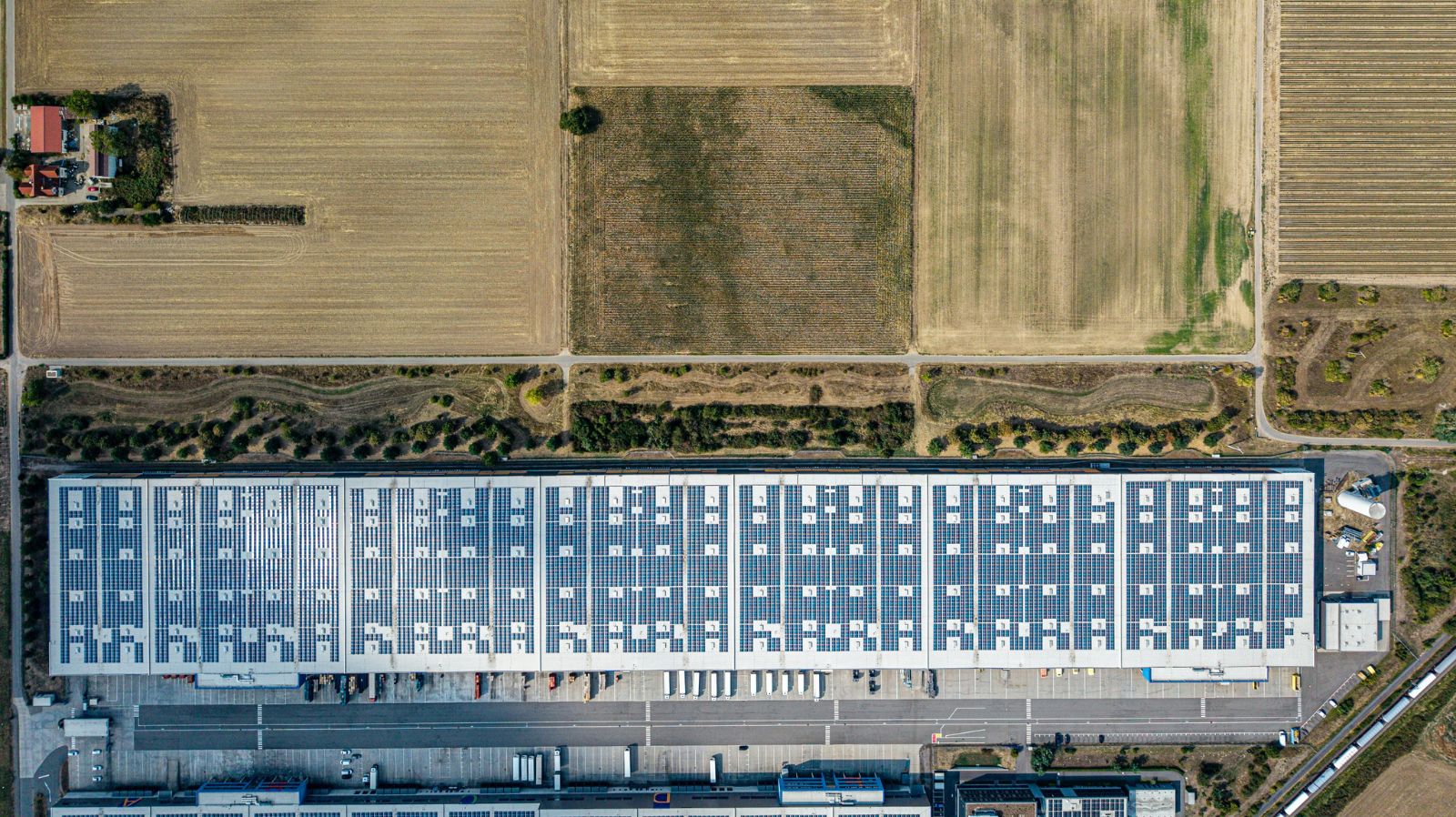
Panel density makes this worse over time. Early in a project, a rooftop offers open walking paths. As crews install more panels, those paths shrink, pushing workers closer to skylights, roof hatches, and unprotected edges during the phase of the job when fatigue has already set in. Commercial roofs also add scale that residential jobs rarely match. A single array can span tens of thousands of square feet, multiplying the number of leading edges, penetrations, and transition points a crew must manage during a shift.
OSHA classifies new solar panel installation as construction work under 29 CFR 1926. Maintenance on existing arrays generally falls under general industry rules instead, which require protection at four feet rather than six. That distinction determines which standards apply on a given day.
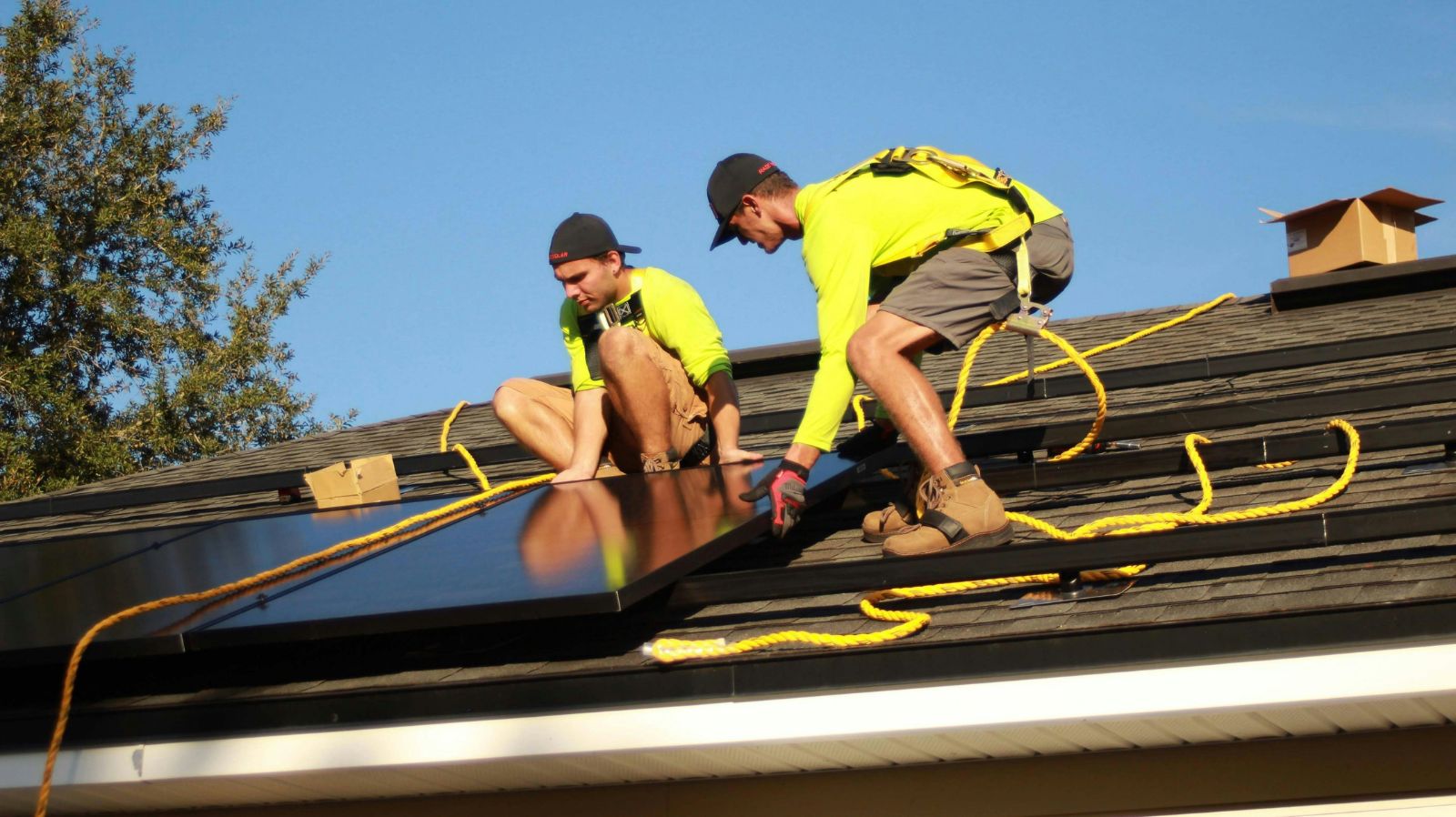
Employers must select one of three accepted methods once workers face a six-foot drop: guardrail systems, safety net systems, or personal fall arrest systems. A guardrail removes reliance on worker behavior, making it the stronger choice wherever the roof layout allows. Personal fall arrest systems remain necessary on sloped roofs or tight leading-edge zones where guardrails cannot be installed before panel work begins.
Under OSHA's construction standard, an anchorage for personal fall arrest must support at least 5,000 pounds per attached worker, or be designed by a qualified person with a safety factor of at least two. That rating matters only if the anchor is tied into a structural member capable of bearing the load. Crews that anchor to rooftop equipment, conduit, or unverified decking create a failure point that defeats the entire system during an actual fall.
After a rooftop solar accident, sorting through subcontractor agreements, construction safety standards, and multi-party insurance coverage requires careful evidence preservation before job site conditions change. For injured workers across the Carolinas, Stewart Law Offices reviews safety documentation, assesses equipment failure, and pursues full compensation in Rock Hill, Fort Mill, Beaufort, Columbia, Lexington, Lake Wylie, and Bluffton in South Carolina and Gastonia, Charlotte, Shelby, and Mount Holly in North Carolina. Its attorneys can meet clients at home or in a medical facility when injuries prevent travel to an office.
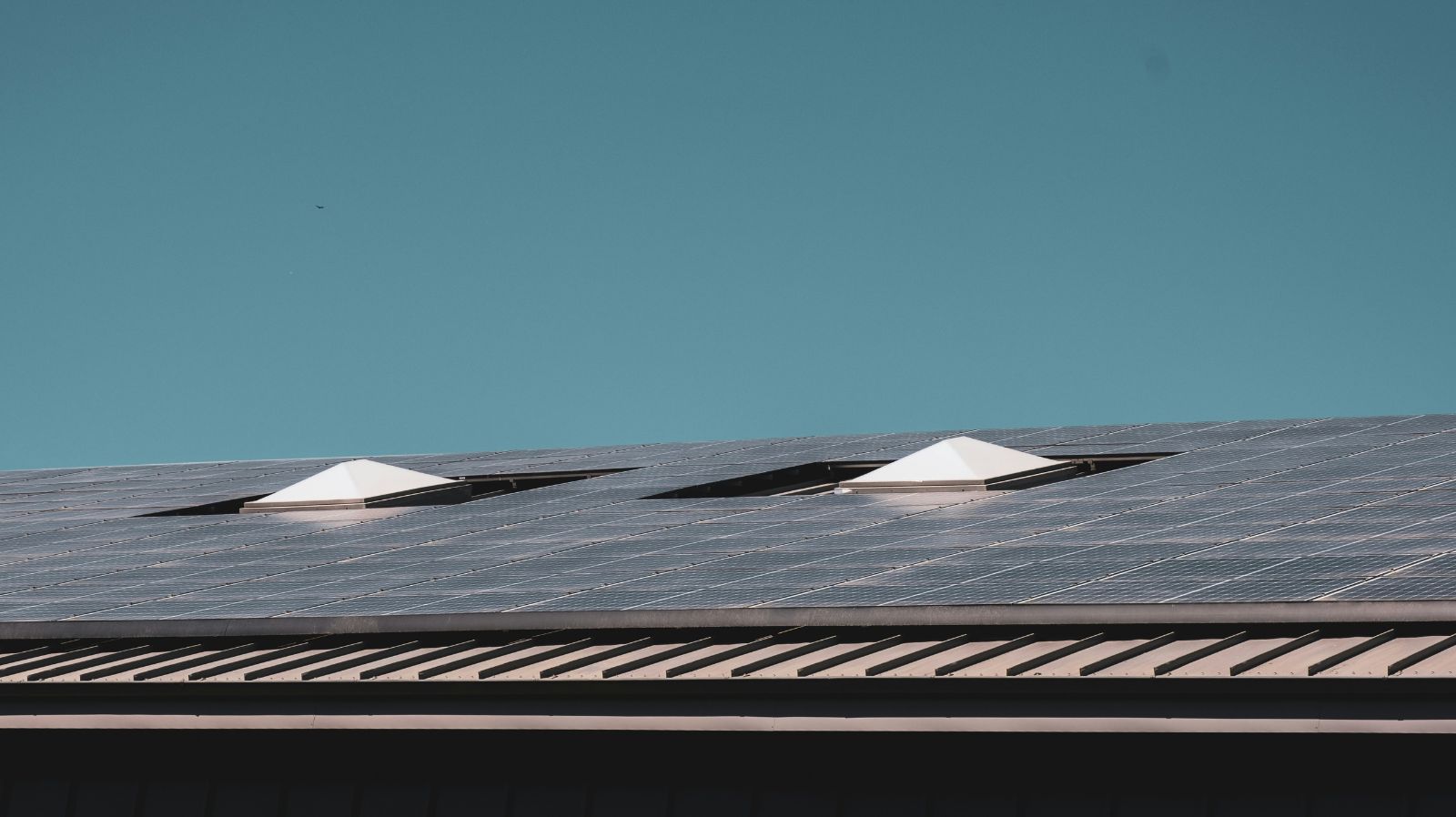
A skylight or roof hatch rarely looks dangerous until a worker's foot goes through it. OSHA's solar guidance requires employers to guard skylights or ensure that workers near them use personal fall protection, a requirement that becomes more pressing as panel rows push walking paths closer to openings.
A pre-installation walk of the full roof surface, documenting every skylight, hatch, and vent penetration, gives a crew the chance to cover or guard each opening before panel density reduces visibility. Waiting until mid-installation to address an opening means working around it while carrying equipment and managing reduced walking space.
Solar modules are heavy, awkward, and prone to catching wind on an open rooftop, which turns a routine lift into a balance hazard. OSHA states that workers should never climb ladders while carrying panels. Ladder hoists, swing hoists, and truck-mounted cranes or conveyors move panels to the roof without forcing a worker to climb with a load, which keeps both hands free for the ladder.
Ground-level staging also reduces how often a panel changes hands on the roof. Crews that pass panels directly from a hoist to an installer, rather than stacking modules for later retrieval, cut down on the repeated carrying trips that build fatigue across a shift.
Unlike most construction trades, solar crews cannot fully de-energize the system they are working on. A module produces voltage whenever light reaches it, so the conductors between the array and its disconnect stay energized even after a breaker is opened. Crews should cover panels during wiring work, test with a meter before touching exposed conductors, and treat every connection point as energized until confirmed otherwise.
Larger systems can bring additional obligations. According to OSHA, solar arrays that supply power to a distribution system (one serving two or more buildings) fall under 29 CFR 1910.269, the electric power generation, transmission, and distribution standard, which sets specific safe work practices and training requirements. Arrays that are not connected to a distribution system are typically covered by the general electrical standards in Subpart S of 29 CFR 1910.
No two commercial rooftops share the same hazard layout, so a generic checklist is less useful than a plan built for the specific building. A pre-shift meeting that reviews the roof's slope, penetrations, anchor locations, and weather forecast gives a crew shared awareness before the first panel goes up.
Harnesses, lanyards, and guardrail hardware degrade with repeated use and sun exposure. A worker who inspects a harness only at the start of a project, rather than at the start of every shift, risks relying on equipment that has already failed in some small, undetected way.
Rooftop surfaces trap heat well above ambient temperature, and a fatigued worker makes slower decisions near an unprotected edge. Scheduled breaks in shade, accessible water, and rotation of workers between ground-level and rooftop tasks keep attention sharp during the hours when fall risk climbs alongside exhaustion.
Solar panel installation safety on commercial roofs depends on treating each phase of the job as its own hazard. Fall protection must be in place at six feet, skylights and hatches need guards or covers before panel rows close in around them, and panels should reach the roof by hoist rather than by hand. Electrical work requires assuming every conductor is live, and the safety plan should adapt as the array grows and crews tire through a shift.
Rooftop solar lets businesses generate clean electricity on site, and protecting the crews who build it is part of doing that transition responsibly. For readers looking for companies that back their environmental commitments with independent verification, Green Hive's sustainable brand directory and certifications database are useful places to start.
Occupational Safety and Health Administration. (n.d.). Green job hazards: Solar energy: Falls. U.S. Department of Labor. https://www.osha.gov/green-jobs/solar/falls
Occupational Safety and Health Administration. (n.d.). Green job hazards: Solar energy: Electrical. U.S. Department of Labor. https://www.osha.gov/green-jobs/solar/electrical
Occupational Safety and Health Administration. (n.d.). 1926.502: Fall protection systems criteria and practices. U.S. Department of Labor. https://www.osha.gov/laws-regs/regulations/standardnumber/1926/1926.502
U.S. Bureau of Labor Statistics. (2026, February 19). National census of fatal occupational injuries in 2024 [News release]. https://www.bls.gov/news.release/cfoi.nr0.htm
Solar Energy Industries Association & Wood Mackenzie. (2026). Solar market insight report 2025 year in review. https://seia.org/research-resources/solar-market-insight-report-2025-year-in-review/