Catching Rainwater Off a New Metal Roof in Wollongong
Green Hive Editorial Team
June 21, 2023
California storm drains send construction runoff straight to creeks and beaches. Follow a raindrop off a bare building site and see which stormwater controls keep mud on site.

Green Hive is reader-supported. When you purchase through links on our site, we may earn an affiliate commission. To understand our thorough approach to rating brands and products, explore our comprehensive methodology.
Green Hive is reader-supported. When you purchase through links on our site, we may earn an affiliate commission. To understand our thorough approach to rating brands and products, explore our comprehensive methodology.
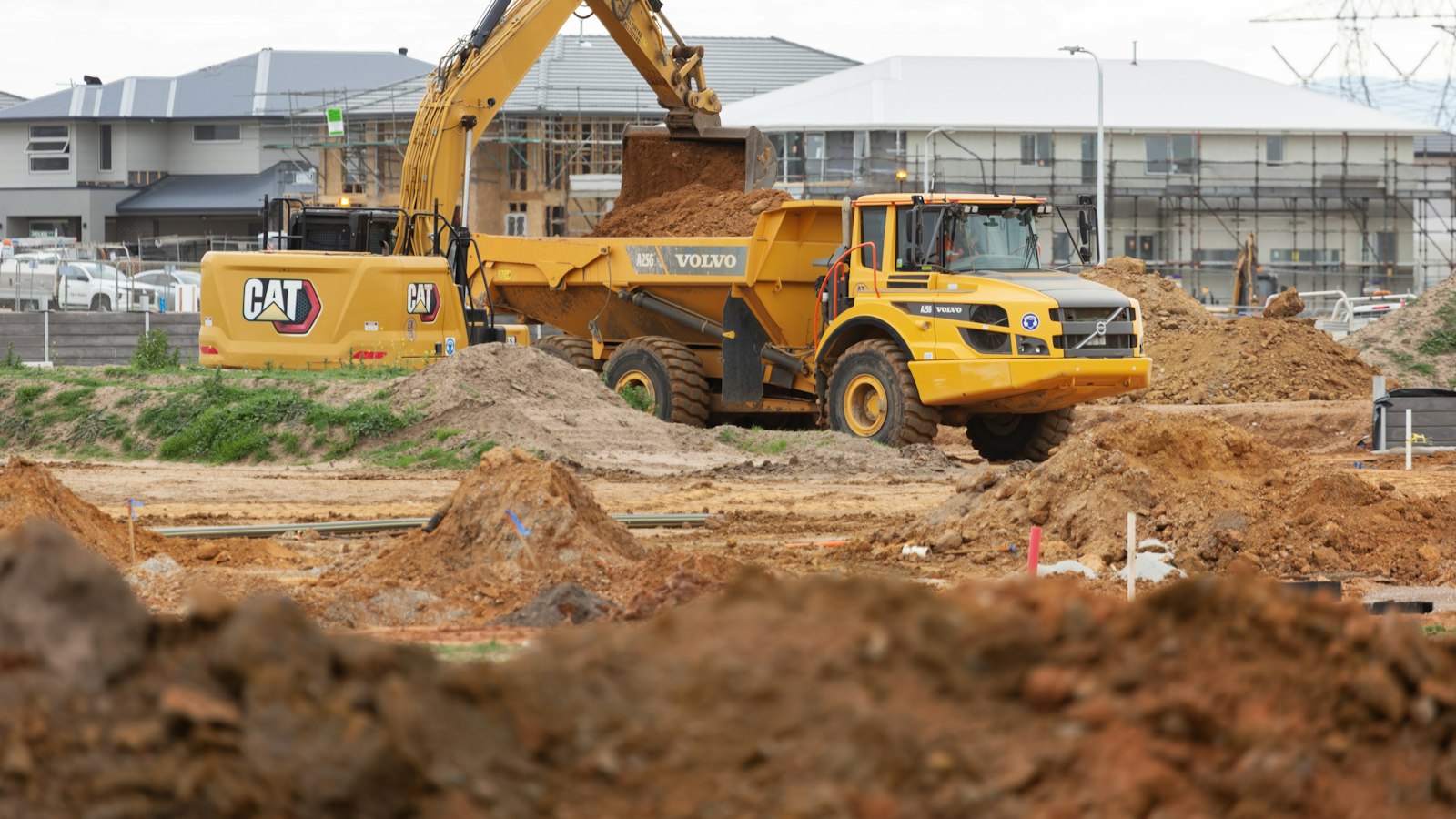
Picture the first big storm of the season rolling over a half-built housing tract. Graders have scraped the topsoil. Stockpiles of dirt sit uncovered. Trucks have tracked mud onto the street.
Then the rain starts.
Most people assume that water heads somewhere to be cleaned. It does not. As Caltrans explains, stormwater is untreated and flows directly into lakes, rivers or the ocean, unlike the water that goes down your sink.
Construction sites make that problem worse. An EPA fact sheet notes that sediment runoff rates from construction sites are typically 10 to 20 times higher than from farmland, and 1,000 to 2,000 times higher than from forests.
So where does all that mud go? It depends almost entirely on what the builder did before the clouds arrived.
On a well-run site, the answer starts with a Stormwater Pollution Prevention Plan, or SWPPP. It maps where water will flow, what could pollute it and which controls will stop it.
The plan is a working document, not a binder that sits in the site trailer. It tells crews where to put silt fence, how to protect storm drain inlets and when to inspect everything.
Many builders hand this job to a specialist. Pro SWPPP, a woman-owned SWPPP contractor with CPESC-certified staff, prepares stormwater plans for projects across the state, handles Notice of Intent filings and draws the site maps local agencies ask for. Its California SWPPP services are built around the state's Construction General Permit. Emerald Site Services, Ninyo & Moore and Kaz Associates also prepare plans and run compliance programs for California builders.
Whoever writes the plan, the goal is the same. Keep the soil on site and keep the water clean.
To see why that plan matters, follow a single raindrop across a site that skipped it.
The drop hits loose, freshly graded soil. With no cover, mulch or erosion blanket, it knocks soil particles loose on impact. Thousands of other drops do the same.
Water gathers into small rills and starts carrying silt, cement wash and a little diesel from the equipment yard. It picks up speed down the slope.
The muddy flow spills past the property line, joins the mud that trucks already tracked onto the road and runs along the curb. It finds an unprotected storm drain inlet and drops in.
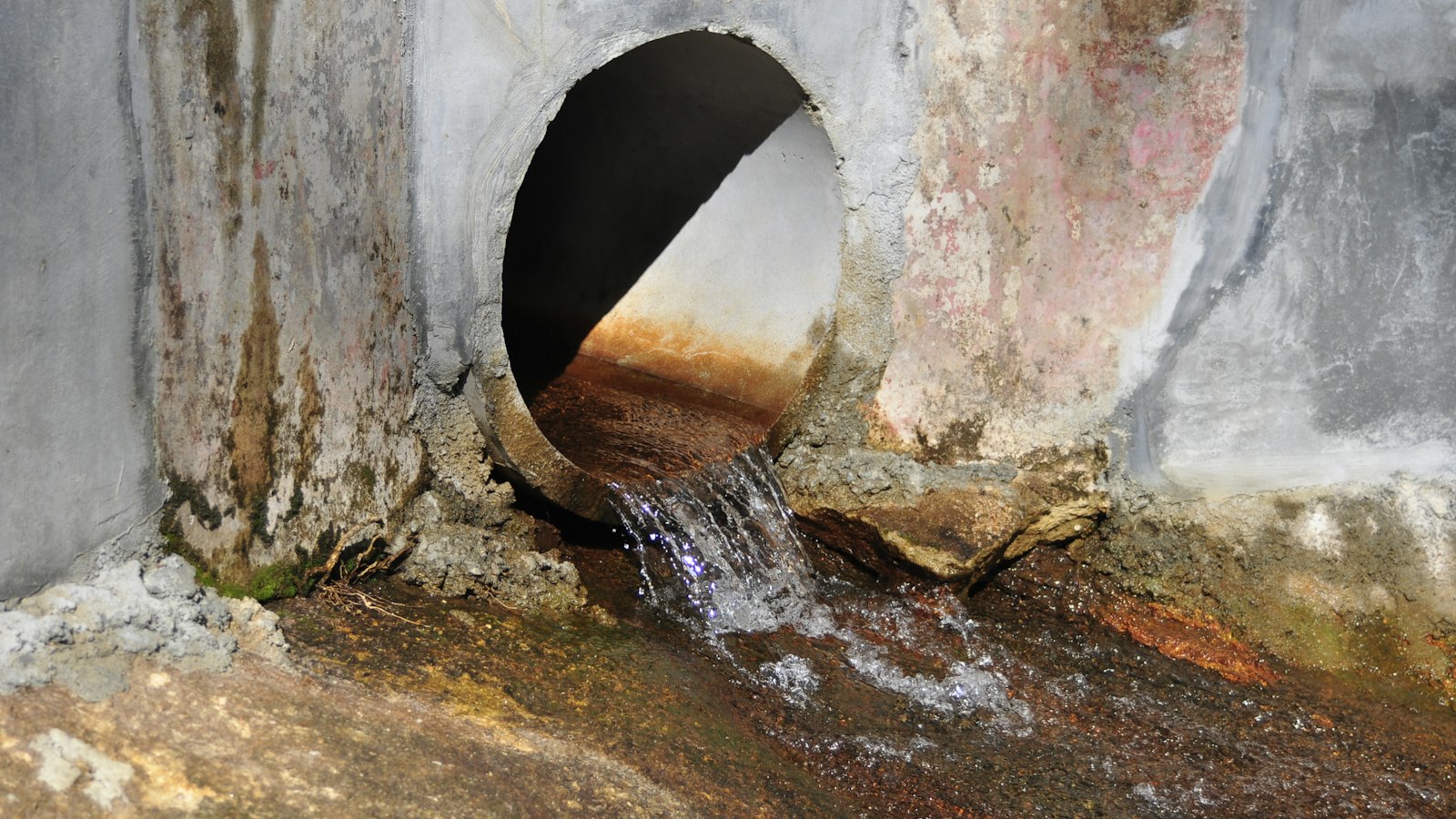
Underground pipes carry the water to an outfall like the one in the photo above. Brown plumes spread into the creek. Sediment settles on the gravel where fish lay eggs and clouds the water for the insects they feed on.
What does not settle keeps moving downstream toward the bay or the beach. Along with the dirt come nutrients, metals and bacteria from the rest of the watershed.
California does not leave this to chance. According to the State Water Board, any construction that disturbs one acre or more, or that is part of a larger plan disturbing that much, must obtain coverage under the Construction General Permit.
That permit requires a SWPPP prepared by a Qualified SWPPP Developer and put into action on site by trained practitioners. It also sets rules for inspections, sampling and reporting, especially around storms.
The stakes are real for people, not just fish. The California Coastkeeper Alliance estimates that stormwater contamination at Southern California beaches sickens about one million swimmers every year. Construction is only one source, but it is one that builders can control.
The good news is that most fixes are simple and cheap compared with a cleanup or a fine.
The trick is timing. Controls need to be in place before the rain, not installed after the first muddy flow reaches the street.
Upkeep matters just as much. A fiber roll flattened by a loader or a clogged inlet filter does nothing in the next storm. Crews need to walk the site, check every control and repair the damage before the forecast turns wet again.
If you are a homeowner, investor or neighbor watching a project go up, you can ask a few fair questions.
Does the site have permit coverage and a current SWPPP? Who inspects the controls before and after storms? Where are the storm drain inlets nearby, and are they protected?
A responsible builder will have clear answers. Vague ones are a sign that the next big storm could send the site downstream.
After a California storm, construction runoff goes wherever gravity and the storm drains take it, and that usually means a creek, a bay or a beach. A solid stormwater plan, the right controls and a team that keeps them working turn that brown flood into clean water. For anyone building in California, that is the difference between a site that protects the coast and one that quietly pollutes it.
California State Water Resources Control Board. (n.d.). Construction General Permit frequently asked questions. https://waterboards.ca.gov/water_issues/programs/stormwater/construction/cgp-faq.html
U.S. Environmental Protection Agency. (n.d.). Stormwater Phase II final rule: Construction site runoff control minimum control measure (Fact Sheet 2.6). https://www.epa.gov/sites/default/files/2015-11/documents/fact2-6.pdf
California Department of Transportation. (n.d.). Clean California: Water. https://cleancalifornia.dot.ca.gov/water
California Coastkeeper Alliance. (n.d.). Stormwater. https://cacoastkeeper.org/what-we-do/stormwater/