
Where Construction Runoff Goes After a California Storm
Green Hive Editorial Team
March 26, 2022
Aerosol or pump? Compare hairspray formats on VOCs, propellants, indoor air and packaging waste, and see which daily habits matter more than the can or bottle you choose.

Green Hive is reader-supported. When you purchase through links on our site, we may earn an affiliate commission. To understand our thorough approach to rating brands and products, explore our comprehensive methodology.
Green Hive is reader-supported. When you purchase through links on our site, we may earn an affiliate commission. To understand our thorough approach to rating brands and products, explore our comprehensive methodology.
Hairspray is one of those products most of us never think twice about. You grab it, you spray it, you move on.
Yet small daily habits add up. NOAA-led research, explained by UC Davis, found that consumer products like shampoo, cleaners and paint now contribute about as much to urban air pollution as vehicle tailpipes. As cars get cleaner, the bottles in our bathroom cabinets matter more.
Hairspray sits right in the middle of that story. So if you are trying to shrink your footprint, the aerosol versus pump question deserves a closer look.
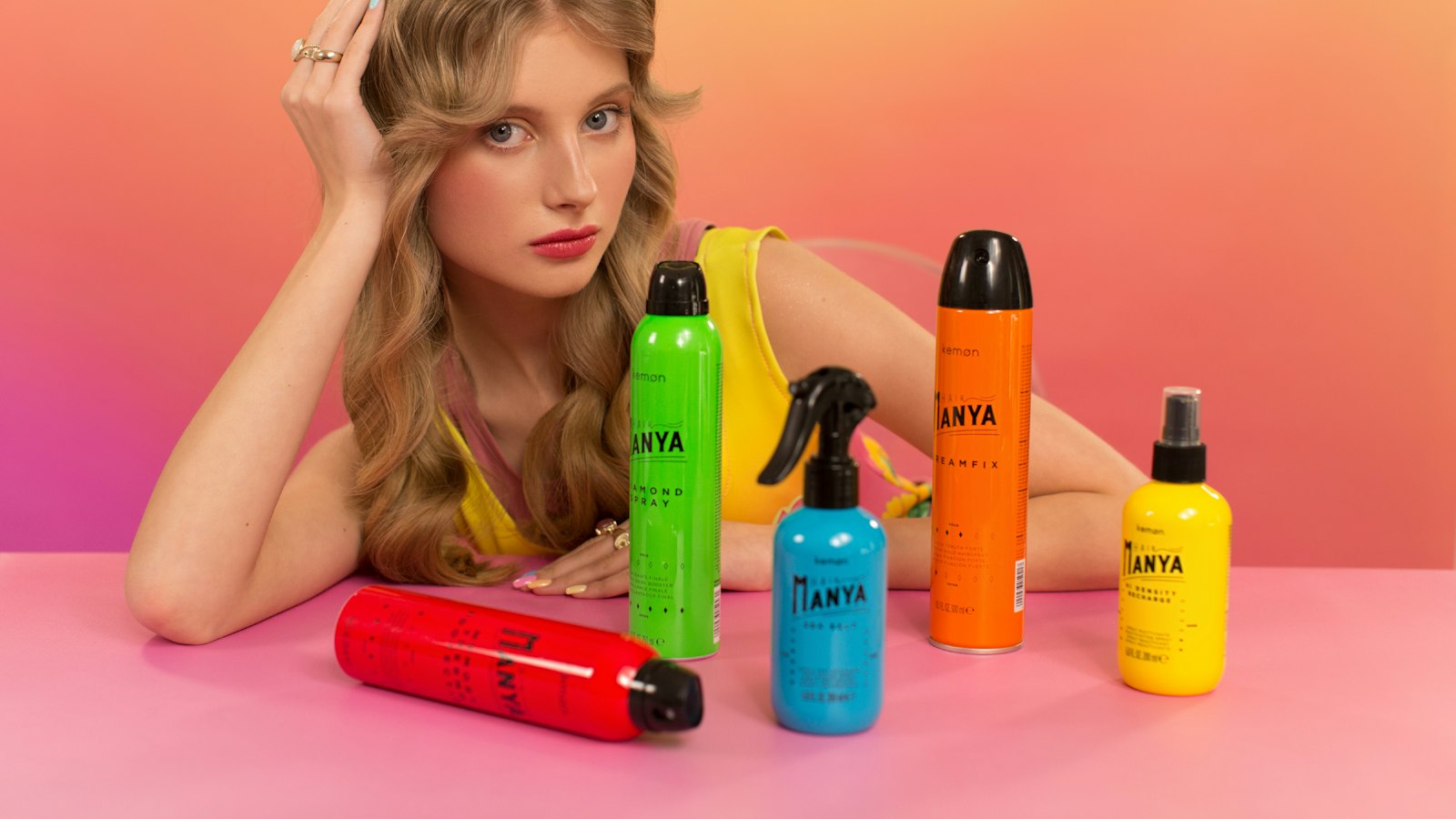
An aerosol can holds the hairspray formula together with a pressurized propellant. Press the nozzle and the gas pushes out a fine, even mist. Modern propellants are mostly hydrocarbon gases or dimethyl ether.
A pump spray, often labeled non-aerosol or "no gas," uses a simple mechanical pump instead. Your finger supplies the pressure. The mist tends to be a little wetter and less even, which is why some stylists still reach for cans when they need big, all-over hold.
The difference shows up in the numbers too. When California regulators first moved to cap smog-forming compounds in household products, they named hair spray the largest source, at 92,000 pounds of hydrocarbons a day. Aerosols averaged 94 percent hydrocarbon content, while pump sprays averaged 70 percent. Limits have tightened a lot since then, but that gap explains how pumps earned their greener reputation.
Shopping by format is easier now than it was back then. Davines, a B Corp certified Italian brand, sorts its hairsprays by hold and finish, and its lineup includes a non-aerosol hairspray called This Is An Invisible No Gas Spray next to its classic medium and strong holds. Aveda, Kevin Murphy and Rahua also make hairsprays for people who care about ingredients and packaging, so you can compare formats without giving up salon quality.
Here is how the two formats stack up on the points that matter most for the planet and for your daily routine.
| Factor | Aerosol | Pump |
|---|---|---|
| Propellant | Yes, usually a hydrocarbon gas | None, powered by your finger |
| Mist | Very fine and even | Slightly wetter and more targeted |
| What goes into the air | Formula plus propellant | Formula only |
| Packaging | Metal can, single use | Plastic or glass bottle, often refillable |
| End of life | Recyclable as metal once fully empty | Bottle often recyclable, pump parts usually not |
| Best for | All-over hold and updos | Daily touch-ups and flyaways |
Outdoor smog is only half the picture. The other half is the small, closed room where most of us style our hair.
A Purdue University study found that a person can inhale a cumulative 1 to 17 milligrams of potentially harmful chemicals during a single home hair care session. The researchers focused on siloxanes, which are common in hair care products and linger in the air after use.
That finding covers hair products in general, not just sprays. Still, anything you mist into the air around your face is worth using with care.
A few easy habits help, whatever format you choose. Open a window or run the exhaust fan. Spray at arm's length, in short bursts. Then step out of the room for a minute while the mist settles.
Aerosol cans have one big thing going for them. They are made of metal, and aluminum and steel can be recycled again and again.
The catch is that a can must be truly empty. Guidance from Washington's Ecology department says to empty cans through normal use and then recycle them as scrap metal. It also warns against putting partially full cans in the trash. Rules vary from town to town, so check what your local program accepts.
Pump bottles skip pressurized waste altogether. Most are plastic, though, and the pump itself often mixes several plastics with a small metal spring. That makes it tricky to recycle curbside.
The real environmental win comes from reuse. A sturdy pump bottle that you refill for years beats a new bottle every month, and it easily beats a stack of empty cans. Brands with refillable hair care make that habit easier to keep.
For most people, a pump spray is the greener everyday choice. It skips the propellant, tends to carry a lighter VOC load and works well with refills.
Aerosols are not villains, though. If you need strong, even hold for a wedding updo or a long shift on your feet, a quality aerosol used lightly can beat a pump you overuse to get the same result.
Ask yourself how much hold you really need on a normal day. Be honest about whether you will refill a pump bottle or just buy new ones. Check if your town takes empty aerosol cans. Your answers will point you to the right format faster than any label.
Whatever you pick, the biggest gains come from how you use it.
Spray less. Aim at the flyaways instead of fogging your whole head.
Layer smartly. A little styling cream or paste can cut how much spray you need to hold a look.
Buy a size you will finish. A half-used bottle that sits in a drawer until it goes off is waste either way.
Store it well. Keep cans away from heat, and keep pump nozzles clean so they do not clog and get thrown out early.
Read the back of the label, not just the front. Details like the format, the hold level and any refill program tell you far more than a green leaf logo or a vague "eco" badge.
Pump hairspray usually comes out ahead on air quality and waste, especially when you refill the bottle. Aerosols can still fit a greener routine if you use them sparingly, empty them fully and recycle the can. Pick the format that suits your hair, then let your habits do the rest of the work.
California Air Resources Board. (n.d.). Air Resources Board cuts smog-forming compounds in hair spray, other household products. https://ww2.arb.ca.gov/news/air-resources-board-cuts-smog-forming-compounds-hair-spray-other-household-products
Purdue University. (2023). Study: Hair care product chemicals can linger in the air in surprising amounts. https://www.purdue.edu/newsroom/2023/Q4/study-hair-care-product-chemicals-can-linger-in-the-air-in-surprising-amounts
University of California, Davis. (2018, February 15). Consumer, industrial products overtake transportation as source of urban air pollution. https://www.ucdavis.edu/news/consumer-industrial-products-overtake-transportation-source-urban-air-pollution
Washington State Department of Ecology. (n.d.). Aerosol cans. https://ecology.wa.gov/regulations-permits/guidance-technical-assistance/dangerous-waste-guidance/common-dangerous-waste/aerosol-cans
B Lab. (n.d.). Davines Group. B Corporation directory. https://www.bcorporation.net/en-us/find-a-b-corp/company/davines/