
.png)

Sustainable Aging in Place: Eco-Friendly Home Safety
Green Hive Editorial Team
March 26, 2022
The greenest skincare product is the one you never had to buy. Here is how minimalist Korean skincare helps you build a four-product routine you will actually finish.

Green Hive is reader-supported. When you purchase through links on our site, we may earn an affiliate commission. To understand our thorough approach to rating brands and products, explore our comprehensive methodology.
Green Hive is reader-supported. When you purchase through links on our site, we may earn an affiliate commission. To understand our thorough approach to rating brands and products, explore our comprehensive methodology.
The beauty industry has a waste problem, and much of it sits in our own bathrooms. Half-used serums that irritated. Moisturizers that felt wrong after a week. Cleansers bought on a friend's recommendation that never suited us. The average skincare shelf is a collection of products that were never right in the first place.

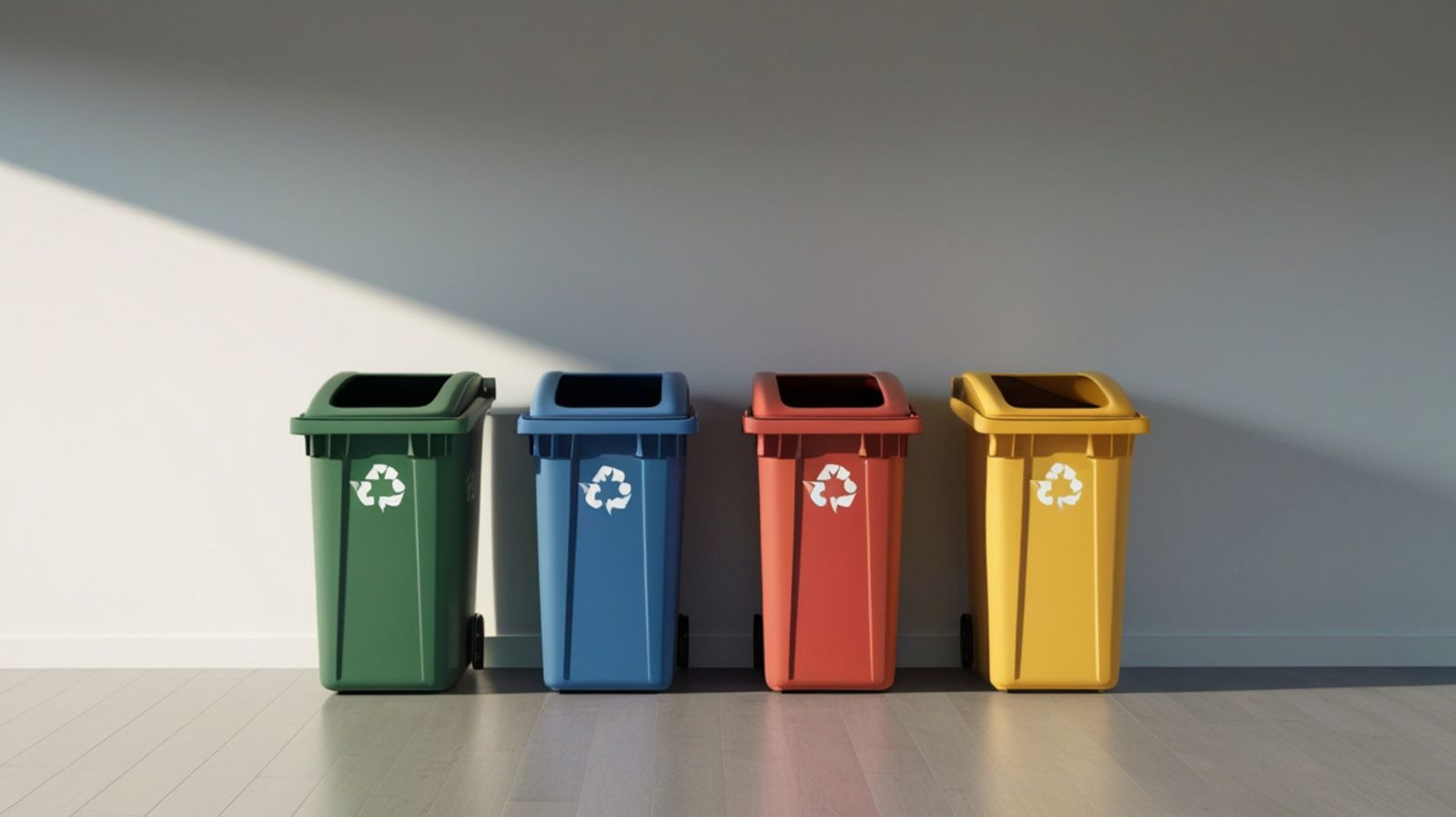
Recyclable packaging gets most of the attention in sustainable beauty, and it matters. But the OECD's Global Plastics Outlook found that only 9% of plastic waste worldwide is actually recycled, so a bottle that never gets bought is worth far more than a bottle that gets sorted correctly. That makes minimalist Korean skincare one of the more useful frameworks for sustainable beauty: it is built around buying correctly the first time.
This article covers what Korean skincare actually prioritizes, what a minimal routine needs, and how to choose products that you will finish rather than abandon.
Korean skincare became famous in the West through the "10-step routine," which was always more marketing story than daily reality. What defines Korean skincare is a philosophy: prevent rather than correct, protect the skin barrier, and choose products for your specific skin rather than for shelf appeal or trend.
In recent years, Korea itself has moved decisively toward what is often called "skip-care" or "skinimalism": shorter routines built from fewer, better-matched products. The logic is simple. A damaged skin barrier is often the result of doing too much: over-cleansing, over-exfoliating, or layering conflicting actives. Dermatology research supports this. Harsh surfactants and high-pH cleansers can strip skin lipids and proteins, leading to dryness, tightness, and barrier damage, and skin surface pH can take several hours to recover after a single wash. Doing less, and doing it correctly, is both the healthier and the cheaper path.
Strip away everything optional and a complete routine is four items:
Essences, ampoules, sheet masks, and sleeping packs are enhancements, not foundations. They can earn a place on the shelf later, once the four basics are stable.
The single treatment deserves emphasis. The most common minimalist mistake is keeping the routine short while rotating five different actives through it. Pick one that matches your primary concern: niacinamide for oil and texture, hyaluronic acid for dehydration, or centella asiatica for sensitivity. Then give it six to eight weeks before judging. Skin turns over slowly, and constant switching is how shelves fill up with half-finished bottles.
This is where waste actually gets prevented: at the point of purchase. Most abandoned products fail not because they are bad, but because they were wrong for that person's skin type. A rich cream that sits heavily on oily skin. A foaming cleanser that strips dry skin. The review that convinced you was written by someone whose skin behaves nothing like yours.
The fix is to filter recommendations by skin type before you buy. Platforms built around this idea are starting to appear. ThePicks, for example, organizes Korean skincare recommendations from creators by skin type (dry, oily, combination, sensitive), so you start from products already in use by people whose skin behaves like yours. Whichever tool you use, the principle holds: a shortlist beats a shopping spree. One well-chosen cleanser instead of three abandoned ones is better for your skin, your budget, and your bin.
Two further habits reduce waste at the same stage:
Green Hive readers already apply this thinking to spotting greenwashing in marketing claims. Applying it to your own purchase decisions is the same skill pointed inward.
Buying less does not make packaging irrelevant. Once your four core products are settled and you are repurchasing them on a predictable cycle, that is exactly the moment to look at refillable formats, recycled-content containers, and brands with verified credentials rather than vague "eco" labels. Several brands in Green Hive's sustainable beauty directory offer refill systems or hold third-party certifications for their ingredient sourcing and packaging.
The order matters, though. Swapping to a refillable version of a product you will abandon in three weeks changes nothing. Swapping to a refillable version of a product you have used consistently for a year removes a bottle from the waste stream every time you repurchase.
Minimalist Korean skincare is not about deprivation. It is about a shelf where everything earns its place: four products you trust, used consistently, replaced only when empty. Your skin gets stability, which is what a healthy barrier needs. Your bathroom stops accumulating regrets. And the industry gets one fewer customer buying products destined for the bin.
The most sustainable skincare shift available to most people has nothing to do with recycling symbols. It is the decision to buy fewer products, matched to your actual skin, and to finish them. Fewer products, better matched. That is the whole philosophy, and it works.
OECD. (2022, February 22). Global Plastics Outlook: Economic drivers, environmental impacts and policy options. OECD Publishing. https://www.oecd.org/en/publications/2022/02/global-plastics-outlook_a653d1c9.html
Lukić, M., Pantelić, I., & Savić, S. D. (2018). The relation of pH and skin cleansing. Current Problems in Dermatology, 54, 132–142. https://pubmed.ncbi.nlm.nih.gov/30130782/
Ananthapadmanabhan, K. P., Moore, D. J., Subramanyan, K., Misra, M., & Meyer, F. (2004). Cleansing without compromise: The impact of cleansers on the skin barrier and the technology of mild cleansing. Dermatologic Therapy, 17(Suppl. 1), 16–25. https://pubmed.ncbi.nlm.nih.gov/14728695/






.svg)
