The Gray Can on Your Utility Pole and What It Means for a Greener Home
Green Hive Editorial Team
June 21, 2023
Your cabinets are probably fine. It's the doors that look tired. Here's why a door swap beats a full tear-out for your budget, your weekend and the landfill.

Green Hive is reader-supported. When you purchase through links on our site, we may earn an affiliate commission. To understand our thorough approach to rating brands and products, explore our comprehensive methodology.
Green Hive is reader-supported. When you purchase through links on our site, we may earn an affiliate commission. To understand our thorough approach to rating brands and products, explore our comprehensive methodology.
Most kitchen remodels start with a sledgehammer. That’s the problem. A full tear-out sends cabinets, countertops and fixtures to the curb. Most of it ends up in a landfill, even when the boxes behind the doors are perfectly sound. If your kitchen feels tired but the structure still works, you have a smarter option. Keep the cabinet boxes. Change the doors.
The numbers are sobering. The EPA estimates that the US generated around 600 million tons of construction and demolition debris in 2018. That’s more than twice the amount of ordinary household trash. Renovation makes up a big share of that pile. Kitchen cabinets are especially hard to recycle because most are made from particleboard or MDF held together with resins, so they rarely get a second life once they’re pried off the wall.

Here’s the thing about cabinets. The boxes take very little abuse. They just sit there, holding plates. The doors and drawer fronts are what you touch dozens of times a day. They chip, fade, warp near the dishwasher and make the room look old faster than anything else. A 1990s oak cathedral door says “1990s” from across the street. The cabinet behind it might have another 20 years left.
Every new cabinet box carries embodied carbon from harvesting, manufacturing, finishing and shipping. When you keep your existing boxes, you avoid most of that footprint. You only replace the parts people actually see.
New doors are one of those rare upgrades that are good for your wallet and the planet at the same time. Remodeling magazine’s 2024 Cost vs. Value report put the average mid-range major kitchen remodel at roughly $80,000. Replacing doors usually costs a small fraction of that, often a few thousand dollars for a standard kitchen, depending on materials and how many units you have.
A full remodel can put your kitchen out of action for six to twelve weeks. New doors? Plenty of homeowners fit them over a weekend. You won’t be eating microwave dinners on the living room floor for a month. Your plumbing, wiring and countertops stay exactly where they are.
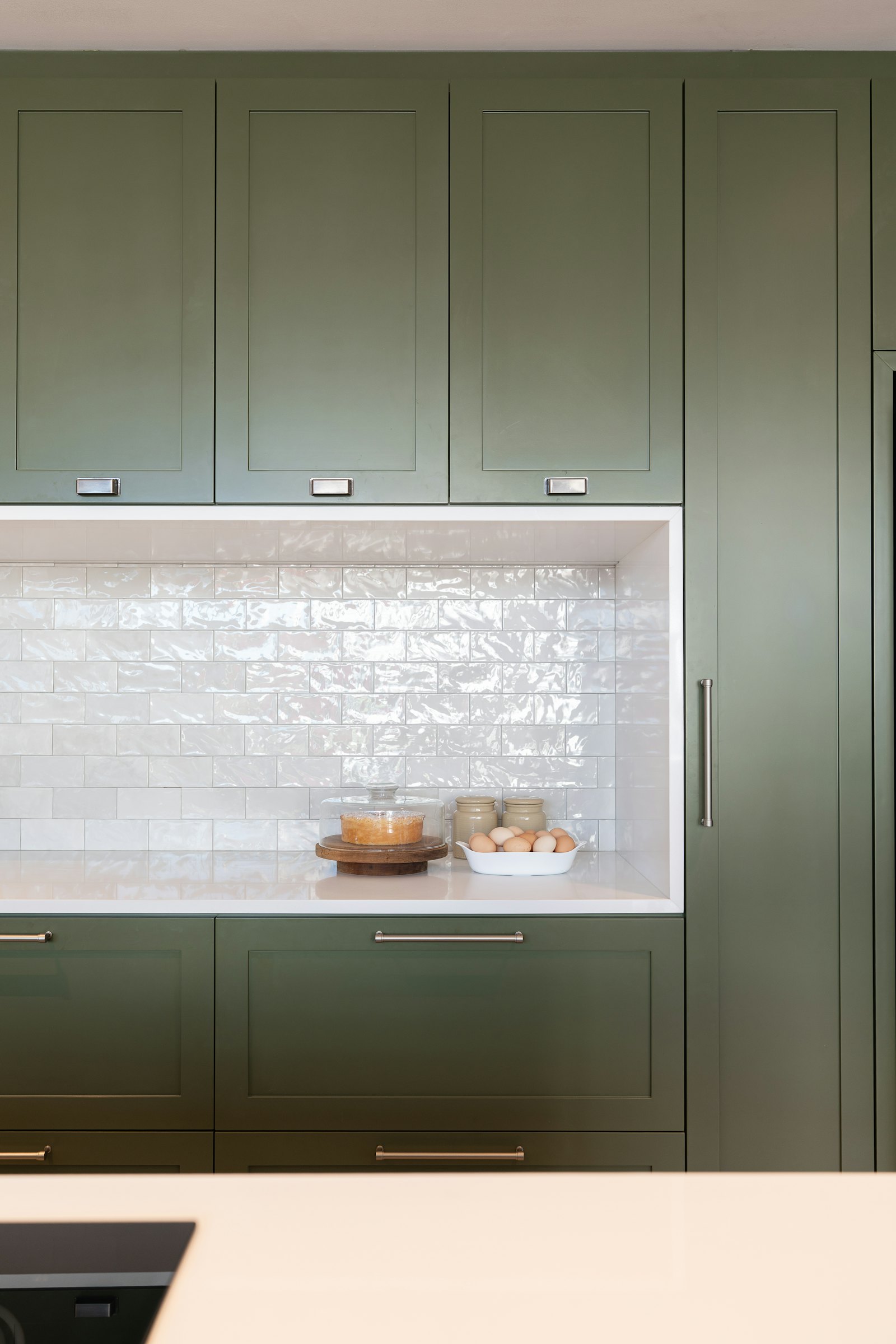
If you’re going to the trouble, pick a look that lasts. Shaker style goes back to the late 1700s, when the Shaker community built furniture around simplicity and good craftsmanship. That clean frame and recessed panel suits farmhouse kitchens, modern apartments and pretty much everything in between. Made-to-measure replacement shaker doors are a popular choice because they’re cut to fit your existing cabinets exactly. That means no gaps, no awkward filler strips and nothing to rebuild behind them.
A little preparation goes a long way. Before you order anything, make sure your cabinet boxes are solid. Look for water damage under the sink, sagging shelves and loose joints. Minor problems can usually be fixed. Serious rot is a different story.
Once the boxes pass inspection, work through a short checklist:
This is where the low-waste part really counts. You can list solid wood doors on Facebook Marketplace or Craigslist, where DIYers snap them up for garage storage and craft projects. Many Habitat for Humanity ReStores take cabinet parts too, as do plenty of local thrift and reuse stores. Even laminate doors can be turned into shelving, a potting bench or a headboard if you’re feeling creative.
New doors do most of the work, but a few small changes make the whole room feel finished. Replace dated handles with brushed brass or matte black pulls. Paint the end panels to match. Add LED strip lights under the wall cabinets; they use a fraction of the energy of old halogen puck lights. If your backsplash is in good shape, leave it alone. If it isn’t, a coat of tile paint can buy you a few more years.
Don’t replace everything at once. The greenest kitchen is usually the one you already have, given a careful refresh.

You don’t have to gut a kitchen to make it feel new. When you keep the structure and change only what you see and touch, you spend less, throw away less and get your kitchen back in days instead of months. It’s a practical, honest kind of sustainability. For more ideas on living lighter at home, explore the Green Hive blog. And when friends ask if you remodeled, you can tell them the truth: you just changed the doors.
U.S. Environmental Protection Agency. (n.d.). Construction and demolition debris: Material-specific data. https://www.epa.gov/facts-and-figures-about-materials-waste-and-recycling/construction-and-demolition-debris-material
U.S. Environmental Protection Agency. (n.d.). National overview: Facts and figures on materials, wastes and recycling. https://www.epa.gov/facts-and-figures-about-materials-waste-and-recycling/national-overview-facts-and-figures-materials
U.S. Environmental Protection Agency. (2018). Construction and demolition debris generation in the United States, 2015. https://www.epa.gov/sites/default/files/2018-09/documents/construction_and_demolition_debris_generation_in_the_united_states_2015_final.pdf
Zonda. (2024). 2024 Cost vs Value report: National averages. Journal of Light Construction. https://www.jlconline.com/cost-vs-value/2024/national/